Doctrine and Mission

  • The Gospel of the Kingdom: Recovering a Kingdom-Centered Approach to Evangelism

    The Gospel of the Kingdom: Recovering a Kingdom-Centered Approach to Evangelism

    For generations, the church has faithfully proclaimed the good news of Jesus Christ through various evangelism methods and gospel presentations. Many of these tools have helped people understand sin, grace, forgiveness, the cross, and the promise of eternal life. These truths are essential, biblical, and necessary.

    The concern is not that traditional gospel presentations are inaccurate. The concern is that many presentations can sometimes be incomplete in their emphasis. They often begin with the individual’s greatest need—guilt, forgiveness, fear of judgment, or the hope of heaven—without placing those realities within the larger biblical story of God’s Kingdom.

    The gospel is not less than forgiveness. It is not less than salvation from judgment. It is not less than the hope of eternal life.

    But it is more.

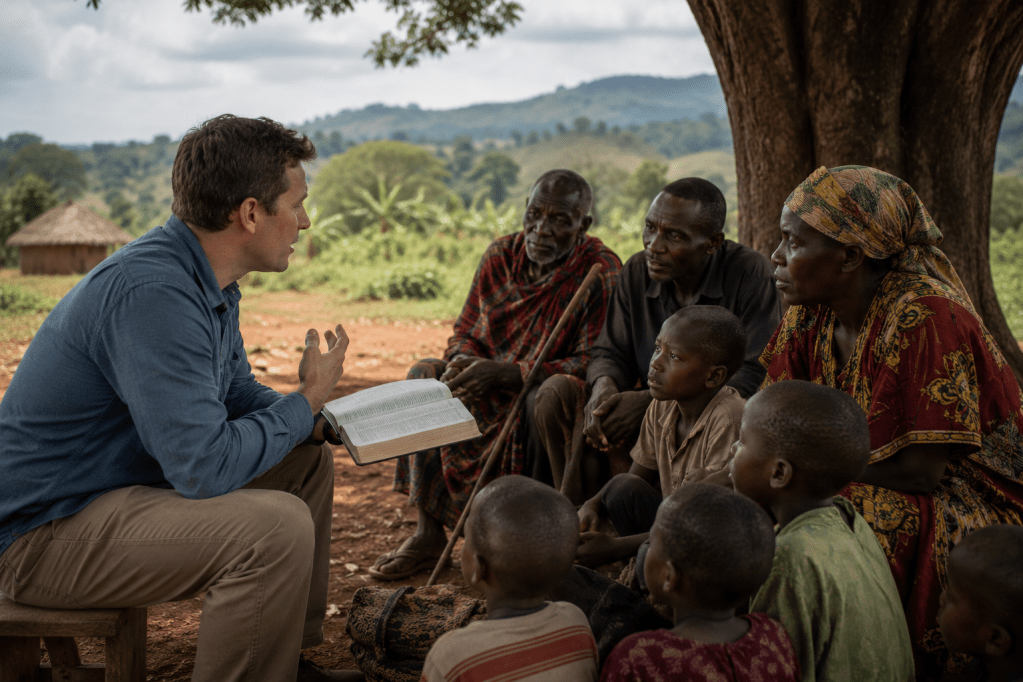
    The gospel is the announcement that God’s rightful King has come, that His Kingdom has arrived, that rebels can be reconciled to Him, and that all people are called to submit to the reign of King Jesus.

    Jesus and the Gospel of the Kingdom

    A Kingdom-centered approach to evangelism begins with the message Jesus Himself proclaimed.

    When Jesus began His public ministry, He announced:

    “The time is fulfilled, and the kingdom of God is at hand; repent and believe in the gospel.”
    Mark 1:15

    Notice the connection Jesus makes:

    The Kingdom has arrived.Therefore, repent and believe.

    The gospel response is not simply acknowledging personal need; it is responding to the arrival of God’s reign.

    Matthew summarizes Jesus’ ministry this way:

    “And he went throughout all Galilee, teaching in their synagogues and proclaiming the gospel of the kingdom and healing every disease and every affliction among the people.”
    Matthew 4:23

    Jesus’ ministry was centered on the Kingdom:

    • He taught the truth of the Kingdom.
    • He proclaimed the good news of the Kingdom.
    • He demonstrated the power of the Kingdom.

    The Kingdom was not a secondary theme of Jesus’ ministry. It was the framework through which He announced salvation.

    Jesus even described His mission in these terms:

    “I must preach the good news of the kingdom of God to the other towns as well; for I was sent for this purpose.”
    Luke 4:43

    After His resurrection, Jesus continued teaching His disciples about the Kingdom:

    “He presented himself alive to them after his suffering by many proofs, appearing to them during forty days and speaking about the kingdom of God.”
    Acts 1:3

    The early church continued this same message. Philip preached “the good news about the kingdom of God and the name of Jesus Christ” (Acts 8:12), and Paul spent his final days “proclaiming the kingdom of God and teaching about the Lord Jesus Christ” (Acts 28:31).

    The gospel of the Kingdom is not a new emphasis added to the gospel. It is the gospel framework proclaimed by Jesus and continued by His apostles.

    The Need for a Kingdom-Centered Gospel

    Many evangelism presentations rightly explain that humanity is separated from God because of sin and that Jesus provides forgiveness through His death and resurrection.

    But sometimes the gospel can be reduced to a transaction:

    “I have my sins forgiven, so I can go to heaven.”

    While forgiveness is glorious and essential, Scripture presents salvation as something larger. Salvation is not only rescue from punishment; it is restoration to our rightful place under the loving rule of God.

    The problem of humanity is not merely that we have broken God’s laws. The deeper problem is that we have rejected God’s rule.

    Sin is rebellion against the King.

    Therefore, the solution is not merely receiving a benefit from Jesus. The solution is reconciliation with the King.

    The gospel invitation is not simply:

    “Accept Jesus as Savior.”

    It is:

    “Submit to Jesus as King.”

    Christ is Savior because He is King. He saves rebels by bringing them back into His Kingdom.

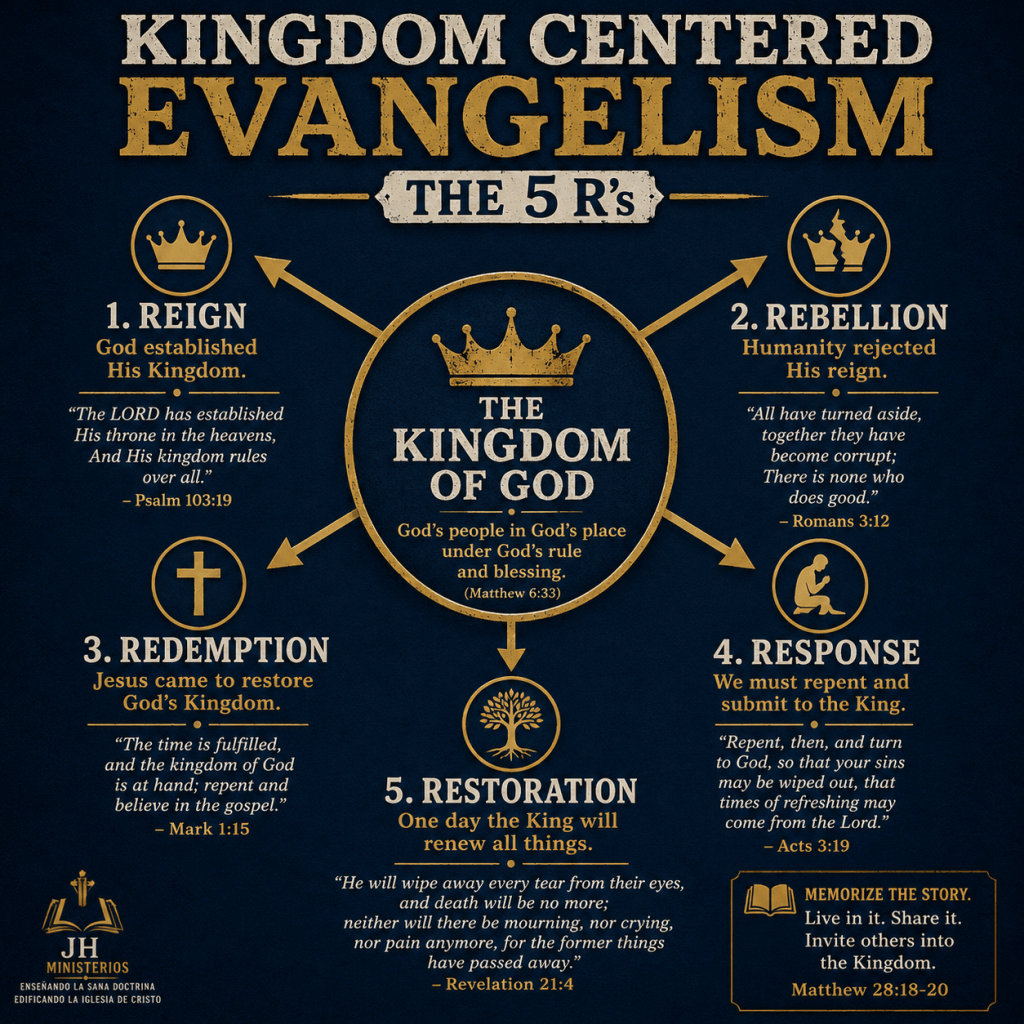
    The Five R’s of Kingdom Evangelism

    A Kingdom-centered evangelism approach follows the biblical storyline from creation to new creation.

    1. Reign — The King Creates His Kingdom

    The story begins with God’s authority.

    God created all things and established His reign over creation. Humanity was created in God’s image to represent Him, worship Him, and live under His good and gracious rule.

    Before humanity had a problem, humanity had a purpose:

    To live under the reign of the King.

    The first question of the gospel is not, “How can God improve my life?”

    The first question is:

    Who is the rightful King?

    2. Rebellion — Humanity Rejects the King

    Genesis 3 reveals humanity’s rejection of God’s authority.

    Sin is more than moral failure. It is rebellion against the rightful King.

    Humanity chose self-rule over God’s rule, independence over submission, and rebellion over worship.

    Every person has participated in this rebellion.

    The human problem is not merely that we need improvement. We need reconciliation with the King.

    3. Redemption — The King Comes to Rescue Rebels

    God did not abandon His Kingdom or His people.

    He promised a coming King.

    Jesus Christ arrived announcing the Kingdom, demonstrating Kingdom authority, defeating sin and death, and accomplishing redemption through His cross and resurrection.

    The cross is not only the payment for sin; it is the victory of the King over His enemies.

    Through Christ, rebels can become citizens.

    4. Response — Rebels Submit to the King

    The proper response to the gospel is repentance and faith.

    Repentance is turning away from rebellion against God.

    Faith is trusting Christ, receiving His grace, and submitting to Him as Lord and King.

    The gospel calls people not merely to receive forgiveness but to enter the Kingdom and live under the authority of Christ.

    Conversion is not simply a decision for Christ.

    It is allegiance to Christ.

    5. Restoration — The King Will Restore All Things

    The gospel does not end with individual salvation. It ends with restoration.

    King Jesus will return.

    He will judge evil, raise His people, renew creation, and establish His Kingdom forever.

    Christians live between the arrival of the King and the return of the King.

    We are citizens of a Kingdom that has already begun and will one day be fully revealed.

    From Evangelism to Discipleship

    A Kingdom-centered gospel naturally leads to Kingdom-centered discipleship.

    If evangelism is only about receiving forgiveness, discipleship can appear to be an optional next step.

    But if evangelism is a call to submit to the King, then discipleship is the lifelong process of learning to live faithfully under His reign.

    The goal is not merely forgiven people waiting for heaven.

    The goal is faithful citizens who joyfully live under the rule of Christ.

    Discipleship asks:

    • What does the King command?
    • How does the King want His people to live?
    • How do we bring every area of life under His authority?

    The Mission of the Church

    A Kingdom-centered understanding of evangelism leads to a Kingdom-centered understanding of the church:

    The mission of the church is to proclaim the Kingdom of God, call rebels to submit to King Jesus, and form faithful citizens who joyfully live under His reign until He returns to restore all things.

    The church exists to announce the reign of the King, display the culture of His Kingdom, form His citizens, and await His return.

    The gospel is not merely the message that we can be forgiven.

    The gospel is the announcement that the King has come.

    He calls rebels home.
    He forgives sinners.
    He forms citizens.
    He restores creation.

    And until He returns, the church faithfully proclaims:

    The King reigns. The Kingdom has come. Submit to King Jesus.
  • The Great Commission Includes Building Christ’s Church

    I cannot think of anything more important for a Christian to do than share the gospel with unbelievers who are headed for hell. Christ has commanded us to make disciples of all nations, and the eternal destiny of men and women hangs in the balance. Every Christian should be burdened for the lost and eager to proclaim the good news of Jesus Christ.

    I do not know many believers who would disagree with that.

    Yet there are some who hear this emphasis and respond, “Amen! Let’s focus on the main thing and not get distracted by secondary issues such as church polity, leadership, and ecclesiology.”

    At first glance, that may sound reasonable. But is the structure and leadership of Christ’s church really a secondary issue?

    The same Jesus who shed His blood for the church declared, “I will build My church” (Matthew 16:18). The church is not a human invention or a man-made organization. It belongs to Christ. He purchased it with His own blood and is actively building it today.

    Furthermore, the same Holy Spirit who descended upon Jesus at His baptism inspired Paul to write 1 Timothy, 2 Timothy, and Titus. These pastoral epistles are not optional appendices to the Christian faith. They contain God’s instructions concerning how Christ’s church is to be organized, led, protected, and strengthened.

    Therefore, I do not see church leadership and polity as merely secondary matters. I do not believe Jesus, who died for the church and continues to build the church, sees them that way either.

    Consider what happens when the gospel is faithfully preached. By God’s grace, sinners are converted. What then? Christ did not intend for those converts to remain isolated Christians disconnected from the body of Christ. They are to be baptized, taught, and incorporated into local churches.

    And who is to lead those churches?

    The Scriptures answer clearly: qualified men who meet the standards laid down by the Holy Spirit in passages such as 1 Timothy 3 and Titus 1. Christ has not left the leadership of His church to human preference or cultural trends. He has spoken.

    This matters greatly for Southern Baptists as well. Local churches sacrificially give money through cooperative missions efforts because we want the gospel to spread throughout North America and around the world. We want churches planted among the nations.

    But what kind of churches are we planting?

    Surely we want churches that are organized according to the pattern Christ has given in His Word. Surely we want churches led by biblically qualified elders and served by biblically qualified deacons. Surely we want healthy churches because healthy churches are God’s ordinary means of making disciples and advancing the gospel.

    Jesus knows what is best for His church. He knows what is healthy. He knows what produces long-term faithfulness and spiritual maturity.

    In reality, this is not separate from the Great Commission—it is part of the Great Commission.

    Jesus commanded His disciples to make disciples, baptize them, and teach them to observe all that He commanded. “Teaching them to observe all that I have commanded you” includes the entirety of inspired Scripture. It includes Romans and Galatians. It includes Ephesians and Colossians. And it certainly includes 1 Timothy, 2 Timothy, and Titus.

    The Great Commission is not merely about getting decisions. It is about making disciples. And disciples are ordinarily made, taught, shepherded, and matured within healthy local churches.

    Gospel proclamation and biblical church order are not competing priorities. They belong together. We preach the gospel so that sinners will be saved. We gather those believers into churches. We teach them the whole counsel of God. We appoint qualified leaders. We plant more churches. And then we send those churches to preach the gospel to the nations.

    That is not a distraction from the mission.

    That is the mission.

  • Does Your Church Really Need Committees, Ministry Directors, and Church Programs?

    Does Your Church Really Need Committees, Ministry Directors, and Church Programs?

    Or Have We Replaced the Biblical Model of Elders and Deacons?

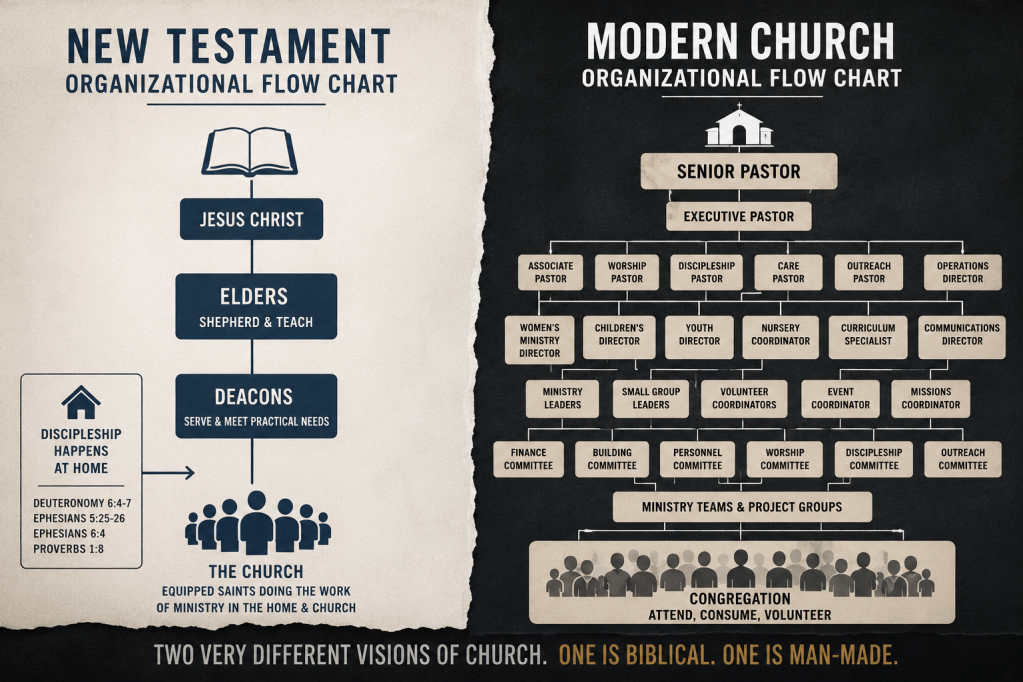
    Modern churches are filled with ministry structures the New Testament never describes.

    Finance committees.
    Women’s ministry directors.
    Children’s ministry pastors.
    Family ministry coordinators.
    Discipleship directors.
    Program directors.
    Ministry teams overseeing ministry teams.

    And yet when we open the New Testament, the structure of the church appears remarkably simple.

    The apostles consistently describe two ordinary offices within the local church:

    • Elders
    • Deacons

    That simplicity should force us to ask an uncomfortable question:

    Have we complicated the church beyond the pattern Scripture gives us?

    The New Testament Pattern Is Surprisingly Simple

    When Paul writes to Timothy about church leadership in 1 Timothy 3, he gives qualifications for two offices:

    • Overseers/Elders
    • Deacons

    Likewise, in Philippians 1:1, Paul addresses:

    “All the saints in Christ Jesus who are at Philippi, with the overseers and deacons.”

    That is the structure.

    Not committees.
    Not boards.
    Not ministry departments.
    Not layers of specialized directors.

    The church in the New Testament was not organizationally complex. It was spiritually serious.

    We often assume effectiveness requires increasing specialization and administrative expansion. But the apostolic churches spread throughout the Roman Empire without the vast institutional machinery many modern churches consider essential.

    The question is not whether organizational tools can sometimes be useful. The question is whether we have slowly replaced the biblical simplicity of the church with corporate models borrowed from the business world.

    What Are Elders Supposed to Do?

    In the New Testament, elders are responsible for the spiritual oversight of the church.

    They teach sound doctrine.
    They guard the flock from error.
    They shepherd souls.
    They equip the saints for ministry.
    They pray.
    They lead.

    Paul tells the Ephesian elders in Acts 20:

    “Pay careful attention to yourselves and to all the flock, in which the Holy Spirit has made you overseers.”

    Peter writes:

    “Shepherd the flock of God that is among you, exercising oversight” (1 Peter 5:2).

    The responsibility of elders is fundamentally spiritual.

    This includes overseeing the teaching ministry of the church.

    In many modern churches, however, teaching has become fragmented into independent ministry silos. Women’s ministries create their own teaching structures. Children’s ministries operate almost autonomously. Small group systems function disconnected from elder oversight.

    But biblically faithful elders cannot delegate away doctrinal oversight.

    If teaching occurs within the church, elders are responsible for ensuring it is sound.

    The church does not need a corporate hierarchy of ministry directors to accomplish this. It needs faithful elders who know the flock and guard the teaching ministry carefully.

    What Are Deacons Supposed to Do?

    Deacons serve the practical needs of the church.

    Their role is not primarily doctrinal oversight but practical service that supports and protects the ministry of the Word.

    Acts 6 gives us the prototype.

    The apostles refused to abandon prayer and the ministry of the Word in order to manage food distribution. Instead, qualified servants were appointed to handle practical matters.

    This allowed the apostles to remain focused on spiritual oversight.

    That pattern remains profoundly important.

    The church has real practical needs:

    • Caring for widows
    • Organizing meals
    • Maintaining facilities
    • Coordinating nursery service
    • Helping members in crisis
    • Managing logistics
    • Supporting mercy ministry

    These are good and necessary works.

    But Scripture assigns such practical service to deaconal ministry, not endless layers of bureaucracy.

    Many churches today function like mid-sized corporations because every ministry becomes its own department requiring directors, committees, meetings, branding, and organizational infrastructure.

    But the New Testament vision is far simpler:

    Elders oversee spiritual matters.
    Deacons oversee practical service.

    The Committee Culture Problem

    Many churches are governed less by elders and more by committees.

    Budget committees.
    Personnel committees.
    Building committees.
    Program committees.

    Sometimes these structures emerge from good intentions. Churches want accountability and shared wisdom.

    But often committees become substitutes for biblical leadership.

    In many churches, elders function more like ceremonial Bible teachers while committees actually govern the church.

    That is not the New Testament pattern.

    Biblically qualified elders are called to lead, shepherd, and oversee the church.

    Likewise, deacons are called to serve practical needs faithfully.

    The church should not need endless layers of governance when spiritually mature elders and faithful deacons are functioning properly.

    We Have Professionalized the Church

    One of the great temptations of modern evangelicalism is the professionalization of ministry.

    Every need becomes a specialized office.
    Every ministry requires a director.
    Every problem demands another program.

    But the New Testament repeatedly pushes responsibility downward into the congregation and especially into the household.

    Parents disciple children.
    Husbands disciple wives.
    Members serve one another.
    Older women teach younger women.
    The body ministers to itself.

    Meanwhile, elders equip and oversee.
    Deacons facilitate and serve.

    This model is far less institutional, but far more relational.

    It also protects the church from becoming dependent upon paid professionals to accomplish ordinary Christian responsibilities.

    Simplicity Is Not Weakness

    Some hear this vision and assume it sounds primitive or inefficient.

    But biblical simplicity is not weakness.

    In fact, complexity often hides spiritual weakness.

    When churches require massive organizational systems to sustain basic discipleship, it may reveal that ordinary Christian life within the congregation has become unhealthy.

    The New Testament church was not built around ministry professionals managing segmented demographics.

    It was built around:

    • Faithful preaching
    • Qualified elders
    • Faithful deacons
    • Ordinary members serving one another
    • Families discipling within the home
    • The body building itself up in love

    The church is not a corporation.

    It is a spiritual family.

    And families do not flourish primarily through bureaucracy.

    They flourish through faithful relationships, godly leadership, and ordinary obedience.

    Recovering the Biblical Pattern

    A biblically healthy church does not need endless organizational complexity.

    It needs:

    • Faithful elders devoted to prayer, teaching, and shepherding.
    • Faithful deacons serving practical needs wisely.
    • Fathers discipling their children.
    • Husbands washing their wives with the Word.
    • Mature members serving one another.
    • The ordinary means of grace functioning faithfully.

    The New Testament pattern is not flashy.

    It will not impress corporate leadership experts.

    But it produces something far more valuable:

    Healthy churches built upon spiritually mature households, qualified elders, faithful servants, and the sufficient wisdom of God’s Word.

  • Are Tongues For Today? Babel, Pentecost, and the Gathering of Nations

    Are Tongues For Today? Babel, Pentecost, and the Gathering of Nations

    Few subjects in modern evangelicalism generate as much confusion as the gift of tongues. For some, tongues are the evidence of spiritual power. For others, they are proof of emotionalism and disorder. But before asking whether tongues continue today, we should first ask a more basic question:

    What were tongues in the New Testament?

    The answer may not be found primarily in modern experience, but in the grand storyline of Scripture itself — from Babel to Pentecost to the nations gathered around the throne in Revelation.

    Babel: The Division of the Nations

    The first major appearance of languages in Scripture is not a blessing, but a judgment.

    At Babel, humanity united in prideful rebellion against God. Rather than filling the earth in obedience to God’s command, mankind sought to exalt itself and make a name for itself. In judgment, God confused human language and scattered the nations across the earth (Genesis 11).

    Language became both a barrier and a reminder. Humanity was fractured. The nations were divided. Peoples could no longer understand one another.

    Babel was not merely about linguistics. It was about judgment, scattering, and separation from unified worship of God.

    But Babel would not be the final word.

    The Great Commission: The Nations Gathered Again

    When Christ came, He announced the reversal of the curse.

    The Great Commission is fundamentally international:

    “Go therefore and make disciples of all nations…”

    The gospel was never intended to remain in one tribe, one ethnicity, or one language. Christ came to ransom people “from every tribe and language and people and nation” (Revelation 5:9).

    What Babel scattered, Christ would gather.

    The division of languages created barriers to the spread of truth. So at the birth of the church, God granted a miraculous sign that the nations were now being regathered under the reign of Christ.

    That sign was tongues.

    Pentecost: A Miracle of Known Languages

    Acts 2 is remarkably clear about what occurred at Pentecost.

    The crowd gathered in Jerusalem was astonished because:

    “each one was hearing them speak in his own language.”

    The emphasis is not on ecstatic speech, but understandable languages. Luke repeatedly stresses this point:

    • “language”
    • “dialect”
    • “our own tongues”
    • “the mighty works of God”

    The miracle was not meaningless utterance. The miracle was that the gospel was proclaimed across linguistic boundaries.

    The Greek word glōssa simply means “tongue” or “language.” In the New Testament context, it refers to real human languages known somewhere in the world, even if unknown to the speaker.

    Pentecost was therefore a direct theological answer to Babel.

    At Babel, languages divided the nations in judgment.

    At Pentecost, languages became the vehicle through which the gospel united the nations in Christ.

    Was Tongues a Heavenly Prayer Language?

    Many modern arguments for tongues depend on the idea of an angelic or heavenly language. Usually this comes from 1 Corinthians 13:1:

    “If I speak in the tongues of men and of angels…”

    But Paul’s statement is clearly hypothetical and hyperbolic. The entire section uses exaggerated examples:

    • understanding all mysteries
    • possessing all knowledge
    • having faith to move mountains
    • giving away all possessions
    • surrendering one’s body to be burned

    Paul’s point is not to define spiritual gifts, but to show that even the greatest imaginable acts are worthless without love.

    To build an entire theology of ecstatic heavenly speech from this single hypothetical phrase stretches the passage beyond its intent.

    Every actual example of tongues in Acts involves real languages connected to the spread of the gospel.

    Tongues and the Mission of the Church

    The gift of tongues makes perfect sense in the context of the early church.

    The gospel was moving rapidly from Jerusalem to Judea, Samaria, and the ends of the earth. The church was crossing linguistic and ethnic boundaries constantly. Before modern translation work, seminaries, dictionaries, language software, and global literacy, miraculous linguistic ability served as a powerful sign authenticating the expansion of the gospel to the nations.

    Tongues were not primarily about private spirituality.

    They were about global proclamation.

    They testified that Christ’s kingdom was for all peoples.

    In this sense, the gift was profoundly missional and deeply connected to redemptive history.

    Do Tongues Continue Today?

    Scripture does not explicitly say that tongues ceased with the apostolic age. Paul says instead that:

    “As for tongues, they will cease… when the perfect comes” (1 Corinthians 13).

    That “perfect” is best understood not as the completion of the canon or the closing of the apostolic era, but as the consummation of all things in the new creation. We still live in the time of partial sight, waiting for what is complete.

    This means we should be careful not to say more than Scripture says. God remains free to act as He wills, and the Spirit distributes gifts as He chooses.

    At the same time, the New Testament consistently presents tongues in a very specific way: real, intelligible languages tied to the mission of the gospel among the nations.

    So the more pressing question may not be simply whether tongues exist today, but whether modern practices correspond to what Scripture actually describes.

    The Final End of Babel

    The story of Scripture does not end at Pentecost.

    It ends in Revelation.

    There we see the redeemed gathered from:

    “every tribe and language and people and nation.”

    The nations are no longer scattered in judgment. They are united in worship around the throne of Christ.

    Ironically, the need for multilingual proclamation will one day disappear altogether.

    Before Babel, humanity shared one language.

    After Babel, languages divided humanity.

    At Pentecost, languages became instruments of gospel mission.

    But in the new creation, the curse will finally be undone.

    The nations will be one people under one King forever.

    Conclusion

    The biblical gift of tongues is best understood within the sweeping story of Scripture itself—judgment at Babel, reversal at Pentecost, global mission in the church age, and final unity in the new creation.

    Tongues mattered because Babel happened.

    Pentecost mattered because Christ came to gather the nations.

    And the ultimate hope of the church is not confusion, nor division, but the day when every tribe and tongue stands together before the Lamb in perfect unity.

  • The Ancient Lie Repackaged: Mormonism, Exaltation, and the Promise to Become God

    The Ancient Lie Repackaged: Mormonism, Exaltation, and the Promise to Become God

    Every human being longs for purpose. We want our lives to matter. We want significance, meaning, identity, and destiny. Deep within us is a desire for glory, permanence, and transcendence. Humanity instinctively knows we were made for something greater than mere survival.

    Religions and worldviews attempt to answer this longing in different ways. Some promise enlightenment. Others promise power, peace, or paradise. But few systems answer the human craving for significance as boldly as The Church of Jesus Christ of Latter-day Saints and broader Mormon theology.

    At the center of Mormonism is the doctrine of exaltation — the belief that faithful humans can ultimately become gods.

    This is not merely a fringe misunderstanding or anti-Mormon caricature. Historically, Mormon teaching has openly proclaimed that God Himself was once a man who progressed to godhood, and that human beings may likewise progress to become divine beings ruling and populating worlds of their own. Lorenzo Snow, a prominent LDS leader, famously summarized Mormon theology this way:

    “As man now is, God once was; as God now is, man may be.”

    That promise has enormous emotional appeal. It answers the human hunger for cosmic significance. You are not merely a creature — you may become a creator. You are not simply called to worship God — you may one day become like Him in essence and status.

    But this idea is not new.

    It is ancient.

    It began in a garden.

    The Serpent’s Promise

    In Genesis 3, the serpent approached Eve with a temptation designed to undermine trust in God’s Word. Satan did not begin with blatant atheism. He offered something far more seductive: exaltation.

    “You will not surely die… For God knows that when you eat of it your eyes will be opened, and you will be like God.” (Genesis 3:4–5)

    The first temptation in human history was the promise of becoming like God.

    The serpent suggested that God was withholding something glorious from humanity. He portrayed obedience as limitation and autonomy as liberation. The path to fulfillment, according to Satan, was not humble dependence upon God but grasping after divinity.

    This is why Mormon exaltation theology is so spiritually dangerous. It repackages the primordial lie of Eden into a religious system.

    The message changes forms, but the essence remains:

    • You can ascend.
    • You can become divine.
    • You can attain godhood.
    • You can possess what belongs to God alone.

    The serpent’s ancient promise has simply been clothed in religious language.

    The Biblical Story Is Entirely Different

    Biblical Christianity does not teach that man becomes God.

    Scripture draws a permanent distinction between Creator and creature.

    God alone is eternal, self-existent, uncreated, omnipotent, and worthy of worship. Humanity, though made in God’s image, remains finite and dependent forever.

    Isaiah 43:10 declares:

    “Before me no god was formed, nor shall there be any after me.”

    God does not say there are many gods progressing upward. He says there never has been and never will be another God.

    Likewise, Isaiah 44:6 says:

    “I am the first and I am the last; besides me there is no god.”

    The Bible does not present God as an exalted man among many gods. It presents Him as utterly unique and incomparable.

    Psalm 90:2 says:

    “From everlasting to everlasting you are God.”

    God did not become God.

    He simply is.

    What Christianity Actually Offers

    Ironically, biblical Christianity offers something far greater than the counterfeit promise of self-exaltation.

    The gospel does not call us to seize divinity.

    It calls us to be reconciled to God through Jesus Christ.

    The Son of God did not come teaching sinners how to become gods. He came to save rebels who wanted to be gods.

    Christianity teaches that humanity’s greatest problem is not lack of exaltation but sin. We are not ascending creatures striving upward through spiritual achievement. We are fallen sinners separated from a holy God and unable to save ourselves.

    And yet the gospel proclaims astonishing grace:

    • The guilty can be forgiven.
    • Rebels can be adopted.
    • Sinners can become children of God.
    • The dead can receive eternal life.

    Believers are united to Christ, transformed into His likeness morally, and glorified in resurrection — but never deified into gods.

    Romans 8 speaks of believers as heirs with Christ. 2 Peter 1 says believers partake in the “divine nature,” not by becoming divine beings, but by sharing in God’s moral holiness and escaping corruption through union with Christ.

    The Christian hope is not independent godhood.

    It is eternal communion with the one true God.

    The Glory of the Gospel

    Mormonism appeals to human pride because it magnifies man.

    The gospel humbles man and magnifies Christ.

    Mormonism says:
    “Ascend and become a god.”

    Christianity says:
    “Repent and be reconciled to God.”

    Mormonism places humanity on a ladder climbing toward deity.

    The gospel announces that God Himself came down in the person of Christ to rescue helpless sinners.

    This is why the difference matters so deeply.

    One message echoes the serpent:
    “You can become like God.”

    The other proclaims the Savior:
    “Trust in the Lord Jesus Christ and you will be saved.”

    The issue is not merely theological nuance. It is the difference between the ancient lie and the eternal truth.

  • If Only Men Can Be Pastors, Can Women Lead Women’s and Children’s Ministries?

    If Only Men Can Be Pastors, Can Women Lead Women’s and Children’s Ministries?

    Why this Question is Asking the Wrong Question.

    One of the common debates in modern evangelicalism is this: If only qualified men can serve as pastors, what leadership roles can women hold in the church?

    Can women lead women’s ministry?
    Can women direct children’s ministry?
    Can women preach to women?
    Can women oversee discipleship programs?

    But perhaps we are beginning with the wrong question entirely.

    The issue is not merely who is qualified to lead these ministries. The deeper question is this:

    Are these ministries, as we commonly structure them today, even biblical categories to begin with?

    Much of the modern church assumes the existence of ministries and leadership offices the New Testament never establishes. We create organizational structures, departments, and staff positions, then afterward ask who is biblically qualified to lead them. But the apostles did not organize the church this way.

    The church at Antioch did not have a women’s ministry director.
    The church at Corinth did not have a children’s ministry coordinator.
    The church at Ephesus did not employ a family pastor overseeing segmented age-based discipleship programs.

    In many cases, we have created ministries Scripture never assigns to the institutional church and then debate who should run them.

    The New Testament Emphasis: The Household

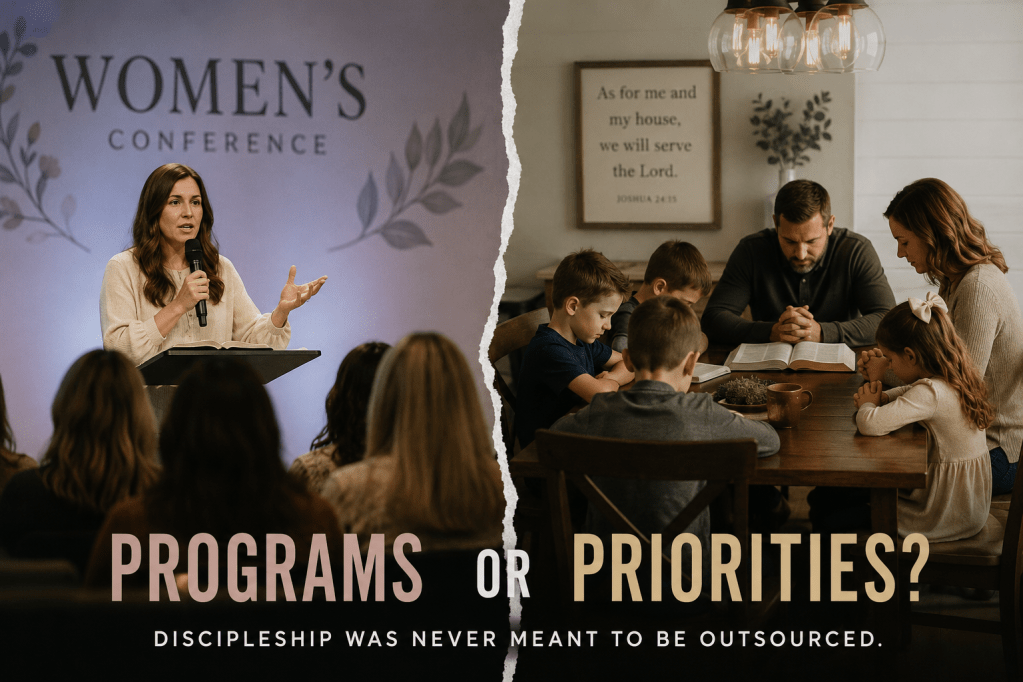
    The New Testament consistently places the primary burden of discipleship not on specialized church programs, but on the Christian household.

    This is especially clear regarding women and children.

    Who Is Responsible for the Discipleship of Women?

    The modern church often assumes women require a formal church ministry structure for discipleship. But when we examine the New Testament, the primary responsibility for the spiritual care and growth of a married woman is placed upon her husband.

    In Ephesians 5, husbands are commanded:

    “Husbands, love your wives, as Christ loved the church and gave himself up for her, that he might sanctify her… having cleansed her by the washing of water with the word” (Ephesians 5:25–26).

    The husband is not merely a provider or protector. He is called to participate in the spiritual sanctification of his wife. He is to wash her with the Word. He is to lead his home spiritually.

    Likewise, in 1 Corinthians 14, when questions regarding teaching and order in the church arise, Paul says:

    “If there is anything they desire to learn, let them ask their husbands at home.”

    Whether one agrees with every interpretive detail of that passage or not, the principle is unmistakable: the apostolic assumption was that husbands would be spiritually engaged enough to instruct their wives.

    The modern church often functions in the exact opposite way. We assume men will remain spiritually passive while the church creates women’s ministry systems to compensate for male failure.

    Instead of asking, “Which women should lead the women’s ministry?” perhaps we should ask:

    Why are Christian husbands not being trained to disciple their wives?

    The solution to weak discipleship among women is not first the creation of more church programs. It is the recovery of spiritually mature men who know Scripture, lead their homes, pray with their wives, and shepherd their families.

    Certainly, older women are called to teach younger women in Titus 2. But even there, Paul does not describe a formal church department with staff structures and ministry branding. He describes godly life-on-life discipleship within the covenant community.

    The emphasis is relational, familial, and organic—not institutionalized and programmatic.

    Who Is Responsible for the Discipleship of Children?

    The same pattern appears with children.

    Modern churches frequently treat children’s discipleship as something outsourced to professionals. Churches hire children’s pastors, children’s directors, curriculum specialists, and age-segmented ministry teams. Parents then often assume the church bears the primary responsibility for their children’s spiritual growth.

    But Scripture never places that burden primarily upon the institutional church.

    It places it upon parents.

    Paul commands fathers in Ephesians 6:4:

    “Fathers, do not provoke your children to anger, but bring them up in the discipline and instruction of the Lord.”

    The responsibility is explicit. Fathers are charged with the spiritual upbringing of their children.

    Deuteronomy 6 is even more comprehensive:

    “These words that I command you today shall be on your heart. You shall teach them diligently to your children…”

    When?
    “When you sit in your house, and when you walk by the way, and when you lie down, and when you rise.”

    Biblical discipleship was never envisioned primarily as a once-a-week classroom experience administered by church specialists. It was woven into the fabric of ordinary family life.

    Parents were to speak of God continually. Instruction was integrated into the rhythms of the home.

    The modern church has often unintentionally displaced parents by professionalizing what God assigned to mothers and fathers.

    We have trained children’s ministry experts while neglecting to train fathers to open their Bibles at the dinner table. We have built sophisticated ministry systems while parents remain intimidated by basic family worship.

    Instead of asking:

    “Who should lead the children’s ministry?”

    Perhaps we should ask:

    “Why are parents not being equipped to disciple their own children?”

    The Church’s Role Is Equipping, Not Replacing

    None of this means the church has no role in discipleship. Far from it.

    Pastors are called to equip the saints for the work of ministry (Ephesians 4:11–12). The church teaches sound doctrine, protects the flock, administers the ordinances, practices discipline, and nurtures believers in the faith.

    But the church must not replace the God-ordained responsibilities of the home.

    The institutional church is strongest not when it becomes the primary discipler of wives and children, but when it equips husbands, fathers, and mothers to fulfill their biblical responsibilities faithfully.

    A healthy church does not create dependence upon ministry professionals. It cultivates mature Christian households.

    This means churches should devote enormous energy toward:

    • Training men to lead spiritually.
    • Teaching husbands how to disciple their wives.
    • Equipping fathers for family worship.
    • Helping parents teach Scripture naturally in everyday life.
    • Cultivating older women who mentor younger women personally.
    • Strengthening families instead of replacing them with programs.

    The answer to spiritual immaturity is not endless specialization. It is recovering the biblical order God already established.

    And this restoration does something else modern churches often overlook: it naturally creates qualified elders.

    One of the qualifications for an elder is that he be “able to teach” (1 Timothy 3:2). Yet many churches search for men who can teach publicly while neglecting the biblical proving ground where pastoral leadership is first demonstrated: the home.

    Paul explicitly connects leadership in the home with leadership in the church:

    “For if someone does not know how to manage his own household, how will he care for God’s church?” (1 Timothy 3:5).

    The New Testament pattern assumes that the men teaching and shepherding the church are already faithfully teaching and shepherding at home.

    The husband washing his wife with the Word.
    The father instructing his children in the Lord.
    The man leading family worship, prayer, and discipleship consistently over time.

    These are not secondary matters. They are the training ground for eldership.

    When churches abandon the household as the center of ordinary discipleship, they should not be surprised when they struggle to find qualified elders. We have often attempted to create pastors through seminaries, staff structures, and ministry programs while neglecting the very context Scripture emphasizes most heavily: faithful leadership in the home.

    Restoring the biblical pattern naturally creates a healthy pipeline of future elders.

    Men who are already teaching Scripture to their wives and children become men capable of teaching the church. Men already shepherding their households become men prepared to help shepherd the flock of God.

    In this model, the church is not competing with the home. The church is equipping the home.

    Pastors equip husbands and fathers. Husbands and fathers disciple their families. Mature households then produce mature men who are qualified to serve as elders who equip the saints for the work of ministry.

    The result is a church culture where discipleship is not centralized in programs, but multiplied through faithful homes.

    Recovering the Ordinary Means of Faithfulness

    Many modern ministry structures arose with good intentions. Churches saw real needs and attempted to address them. Some women have been greatly encouraged through women’s Bible studies. Some children have learned Scripture through church classes.

    But good intentions do not automatically establish biblical priorities.

    The question is not whether a program can produce some good. The question is whether the church is unintentionally shifting God-given responsibilities away from the home and onto institutional structures He never commanded.

    When churches normalize the idea that women require a designated ministry department to be discipled, or that children require professionals for spiritual formation, we may actually weaken the very people God commanded to lead.

    The biblical model is slower, simpler, and far more ordinary.

    Fathers opening the Bible with their children.
    Husbands praying with their wives.
    Mothers teaching diligently throughout daily life.
    Older women mentoring younger women personally.
    Pastors equipping households through faithful preaching and teaching.

    This does not look impressive by modern organizational standards. It cannot always be branded, scaled, or marketed.

    But it looks much closer to the New Testament.

    The Real Crisis

    The real crisis in many churches is not the absence of women ministry directors or children’s pastors.

    The real crisis is the absence of spiritually mature men.

    We have built ministries to compensate for male passivity rather than confronting it directly.

    Instead of creating endless structures to work around absent spiritual leadership, the church should recover the biblical vision of husbands and fathers who know God’s Word, love their families, and lead them faithfully.

    The goal is not to diminish women or children. The goal is to restore the household to its biblical place as the primary center of discipleship.

    The church does not need more unbiblical offices to solve spiritual weakness.

    It needs faithful pastors equipping faithful husbands, faithful wives, faithful fathers, faithful mothers, and faithful households for the glory of God.

  • Whose Authority?

    Whose Authority?

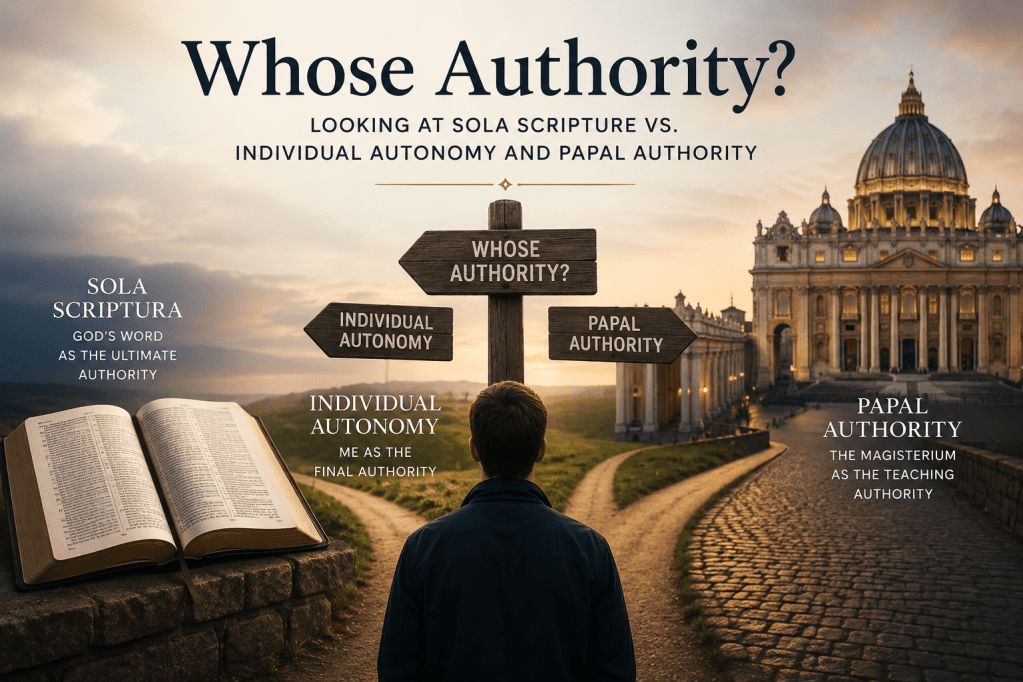
    A Case for Sola Scriptura vs. Expressive Individualism and Papal Authority

    In our home there is a daily, almost ordinary battle over authority. As parents, we are the God-ordained authority over our daughter, responsible before Him to guide, correct, and protect her. And yet, like every child made in God’s image, our 10-year-old is not naturally inclined to embrace that structure without resistance. She does not usually reject everything outright, but she resists something more subtle and more fundamental: the idea of being told what to do.

    “Clean your room.” “Go outside and play.” “Come back in and clean up.” These are simple, good, and loving instructions. And yet they often meet an internal pushback—not always open rebellion, but a desire underneath it all to be her own authority. She wants, in her own small way, to be self-governing. Not necessarily to do evil, but to not be ruled.

    That impulse is not unique to children. It is, in fact, deeply human.

    Being made in the image of God means we were created for dominion. Genesis 1:26–28 teaches that God gave Adam and Eve real authority over creation. They were to “rule” and “subdue” the earth, but always as representatives under God’s greater authority. Their dominion was real, but derivative. They were kings under the true King, exercising authority that was borrowed, not absolute.

    The tragedy of the fall is not that they wanted influence, but that they wanted autonomy. They rejected delegated dominion in favor of independent dominion. Instead of ruling under God’s Word, they sought to define good and evil for themselves. In other words, they wanted authority without submission. And the moment that desire took root, sin, disorder, and death entered the world. Humanity has been living out the consequences ever since.

    We still see that same impulse everywhere today, only in more sophisticated forms. Modern culture often assumes that the individual is the highest authority. Truth is frequently treated as internal rather than external. Feelings become decisive. Identity is self-defined. Even when external voices speak—science, history, parents, or tradition—the individual is told that none of them can ultimately define reality for you. “You determine who you are.” “You define your truth.”

    This is autonomy elevated to a worldview.

    But the same underlying issue also appears in religious contexts, though in different expressions. One version of this is “choose-your-own-adventure” theology, where Scripture is treated as raw material to be shaped by personal preference. Doctrine becomes fluid. Truth bends toward what feels right, what is culturally acceptable, or what is emotionally comfortable. In that framework, the individual effectively becomes the final interpreter, and Scripture loses its binding authority.

    On the opposite end is another attempt to solve the same problem: the transfer of ultimate authority away from the individual and into an institution. In Roman Catholicism, authority is located in the magisterium—the Pope and church councils. The ordinary believer is not encouraged to interpret Scripture independently, because it is considered unsafe or unreliable. Instead, the Church is presented as the final interpretive authority: trust the Church, trust the Pope, trust the official teaching office.

    In both cases, however, the same foundational problem remains: where does ultimate authority reside? Is it the individual? Or is it an institution made up of fallible human beings?

    Because Scripture is consistent on one point that both extremes struggle with: every human authority is fallible. Individuals err. Churches err. Councils err. And history—both biblical and post-biblical—confirms this repeatedly. Even the most respected leaders and systems are capable of distortion when placed above the Word of God.

    That is why the Reformers recovered and defended the principle of Sola Scriptura: Scripture alone is the final and infallible authority for the Christian. Not Scripture isolated from the church, as though believers are meant to be independent agents disconnected from the body of Christ. But Scripture above the church, above tradition, above councils, and above every human authority.

    Scripture itself testifies to this authority. Paul writes, “All Scripture is inspired by God and profitable for teaching, for reproof, for correction, for training in righteousness” (2 Timothy 3:16). Jesus prays to the Father, “Sanctify them in the truth; Your word is truth” (John 17:17). And the Bereans are commended precisely because they did not blindly accept apostolic teaching, but “examined the Scriptures daily to see whether these things were so” (Acts 17:11).

    Even apostolic preaching was tested against the written Word.

    At the same time, Sola Scriptura does not mean “solo Scriptura”—as though the Christian life is lived in isolation, with every person functioning as their own final theological authority. God has never intended His people to live that way. He has given pastors, elders, and teachers to shepherd His church (Ephesians 4:11–13). Their role is real, necessary, and good. They are gifts of Christ to His body.

    Likewise, historic creeds and confessions are not enemies of Scripture but servants of it. They are summaries forged in the fires of controversy, designed to clarify biblical truth, protect the church from error, and provide unity in essential doctrine. When used rightly, they function like guardrails—helping the church stay on the path of faithful interpretation.

    But they remain subordinate. A creed has authority only insofar as it reflects Scripture faithfully. A pastor has authority only insofar as he proclaims God’s Word accurately. The church is not over the Word; it is under the Word. It does not create truth; it receives it.

    So the Christian life avoids two opposite errors. On one side is the illusion of absolute personal autonomy—where the individual becomes the final authority. On the other is the surrender of conscience to fallible human institutions. Both ultimately displace the voice of God.

    True biblical Christianity submits neither to self nor to man, but to God speaking in His Word.

    In the end, the question of authority is not abstract or merely theological—it is deeply personal, and it surfaces in everyday life. In parenting. In culture. In the church. In our own hearts. We all resist being governed. We all feel the pull toward autonomy.

    But the gospel does not call us to autonomy. It calls us to submission—to a better authority, a rightful King, and a perfect Word that does not err.

    We are not meant to be our own authority. We are meant to live joyfully, humbly, and securely under the authority of Christ, revealed in Scripture, and faithfully applied in the life of His church.

  • When Churches Prefer Control Over Shepherding: A Call for Tested Pastors and Biblical Maturity

    When Churches Prefer Control Over Shepherding: A Call for Tested Pastors and Biblical Maturity

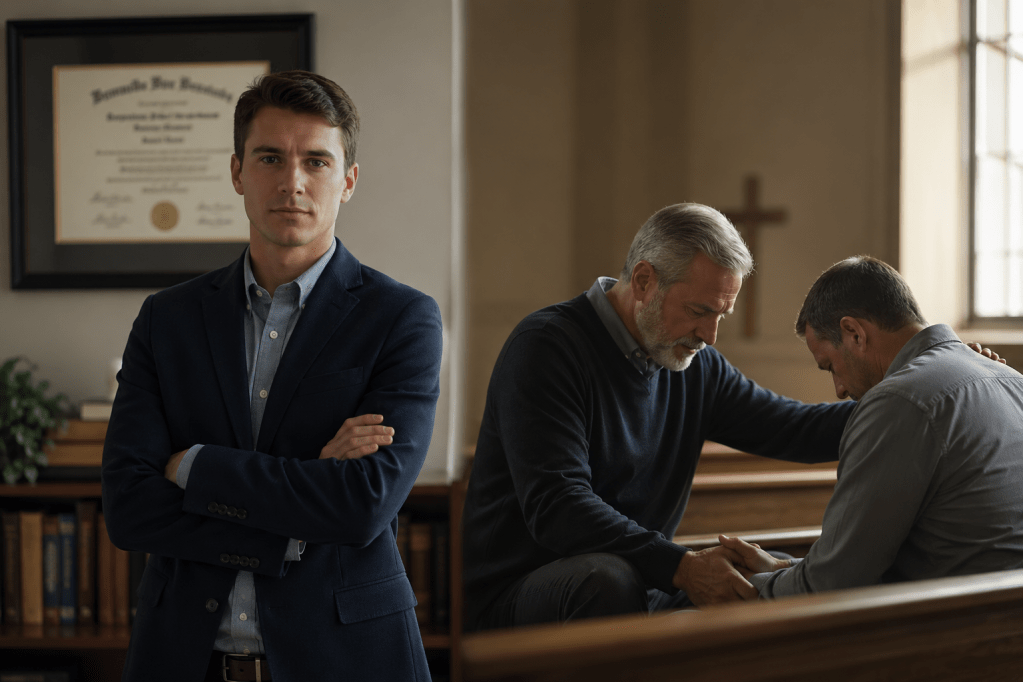
    There is a troubling pattern emerging in some churches—one that is often unspoken but plainly visible. Rather than seeking faithful, seasoned shepherds, some congregations repeatedly install very young pastors, not because they are the most qualified, but because they are the most manageable.

    This is not a new problem. But it is one that strikes at the very heart of what Christ intends for His church.

    The Subtle Temptation: A Pastor You Can Manage

    It would be unfair to say every young pastor is chosen for the wrong reasons. God has used many men in their twenties in powerful ways. Yet there are cases where the pattern becomes too consistent to ignore: a church cycles through inexperienced men, often bypassing older, proven shepherds.

    Why?

    Because a younger, less-tested pastor is often easier to influence, easier to redirect, and—if we are honest—easier to control.

    But this reveals a deeper issue. The problem is not ultimately age. It is authority.

    Some churches do not want a shepherd they must follow. They want a figurehead they can guide.

    And that is a dangerous inversion of God’s design.

    Christ’s Design: Shepherds Who Lead, Churches That Follow

    Scripture consistently presents pastors as shepherds who lead, not representatives who merely reflect congregational preferences.

    In passages like Hebrews 13:17, believers are commanded to “obey your leaders and submit to them, for they are keeping watch over your souls.” Likewise, elders are described in 1 Peter 5 as those who “shepherd the flock of God… exercising oversight.”

    This does not mean pastors are authoritarian. Far from it. Biblical leadership is marked by humility, gentleness, and accountability.

    But it does mean this:
    A church is not called to control its shepherd, but to be shepherded by him.

    When a church consistently avoids strong, mature leadership in favor of pliability, it is not protecting itself—it is resisting God’s appointed means of care.

    The Biblical Weight of Being “Tested”

    One of the clearest qualifications for church leadership is that a man be tested and proven.

    In 1 Timothy 3, Paul warns against appointing a “recent convert,” lest he become conceited and fall into condemnation. While this passage is often applied narrowly to spiritual maturity, the principle is broader:
    Men entrusted with spiritual oversight must have a track record of faithfulness.

    They must have:

    • Endured suffering
    • Navigated conflict
    • Shepherded real people through real sin and sorrow
    • Demonstrated stability over time

    This kind of formation does not happen quickly.

    It is forged in the ordinary, often hidden work of ministry—years of being corrected, refined, and sharpened under the leadership of other faithful pastors.

    A Word to Young Men: Do Not Rush the Process

    For men in their twenties who feel called to ministry, the exhortation is not “step back,” but “slow down.”

    There is a world of difference between:

    • Having gifting, and
    • Being ready to shepherd a flock

    Young men need:

    • Time under wise elders
    • Space to make mistakes without catastrophic consequences
    • Opportunities to teach, serve, and grow without bearing the full weight of pastoral responsibility

    To pursue the pastorate prematurely is not a mark of zeal—it can be a failure to grasp the gravity of the office.

    The desire to lead must be matched by the willingness to be led.

    A Word to Churches: Seek Shepherds, Not Projects

    Churches must ask themselves a hard question:

    Do we want a pastor we can shape, or a shepherd who will shape us?

    The answer will determine not only the health of the leadership, but the spiritual trajectory of the entire congregation.

    Faithful churches should look for men who are:

    • Above reproach over time
    • Proven in doctrine and life
    • Respected by those who know them best
    • Seasoned enough to lead without being swayed by every internal pressure

    This does not mean age alone qualifies a man. But it does mean that experience matters, and testing matters.

    A church that consistently avoids such men may not be protecting itself—it may be avoiding accountability.

    The Cost of Getting This Wrong

    When churches prioritize control over qualification, several things happen:

    • Leadership becomes weak or inconsistent
    • The congregation remains immature
    • Conflict is mishandled or avoided
    • The church slowly reshapes itself around preferences instead of truth

    In the end, both pastor and people suffer.

    The young man is placed in a role he is not yet ready to bear.
    The church is deprived of the mature care it desperately needs.

    A Better Way Forward

    The solution is not to exclude young men from ministry, nor to idolize age.

    It is to return to a biblical vision:

    • Young men are trained, tested, and sent—not rushed.
    • Churches seek proven shepherds—not controllable leaders.
    • Pastors lead with humility—and congregations follow with trust.

    This is slower. It is less convenient. It requires patience on all sides.

    But it is God’s way.

    And in the long run, it produces something far better than control:

    It produces healthy churches, faithful pastors, and a testimony that reflects the wisdom of Christ Himself.

  • Above Reproach, not Above Repentance

    Above Reproach, not Above Repentance

    The difficult balance of pastoral integrity and honest confession

    There is a quiet tension built into pastoral ministry—one that every faithful shepherd eventually feels but few articulate well. On the one hand, Scripture calls pastors to be “above reproach” (see 1 Timothy 3:2). On the other, they are called to be examples to the flock (1 Peter 5:3).

    Too often, those two callings are misunderstood as being at odds. If a pastor must be above reproach, does that mean he must appear flawless? If he is to be an example, what exactly is he modeling—moral perfection, or something deeper?

    The answer is not found in choosing one over the other, but in holding them together rightly.


    Above Reproach Does Not Mean Sinless

    The phrase “above reproach” has sometimes been flattened into an unrealistic expectation: a pastor must never stumble, never struggle, never fail in any visible way. But that is not what Paul is describing.

    “Above reproach” does not mean sinless—it means blameless in reputation. A pastor’s life should not be marked by patterns of disqualifying sin, hypocrisy, or scandal. His character should be consistent, his conduct credible, and his life free from legitimate accusation.

    But Scripture never presents pastors as men who have arrived. In fact, the same apostle who wrote the qualifications in 1 Timothy openly confessed his ongoing battle with sin (see Romans 7). The qualification is not perfection—it is integrity.

    A man can be above reproach and still be deeply aware of his own remaining sin.


    The Danger of Confusing Integrity with Image

    When “above reproach” is misunderstood as “never visibly failing,” pastors can begin to curate an image rather than cultivate holiness.

    They learn to hide weakness instead of confessing it.
    They manage perception instead of pursuing repentance.
    They fear exposure more than they fear sin itself.

    This is not only spiritually dangerous for the pastor—it is spiritually damaging for the church.

    A congregation that only sees polished strength will assume that mature Christianity means suppressing weakness. Sin goes underground. Confession becomes rare. Grace feels theoretical.

    In trying to protect the standard, we can actually undermine the gospel.


    What Does It Mean to Be an Example?

    When Peter exhorts elders to be “examples to the flock” (1 Peter 5:3), he is not calling them to perform perfection. He is calling them to model Christian maturity.

    And Christian maturity is not the absence of sin—it is the presence of repentance.

    An exemplary pastor shows his people:

    • How to respond when he sins
    • How to confess quickly and honestly
    • How to seek forgiveness humbly
    • How to rest in the grace of Christ rather than his own righteousness

    In other words, he models what it looks like to live as a sinner saved by grace.

    This is why Paul could say, “Be imitators of me, as I am of Christ” (1 Corinthians 11:1). Paul was not claiming perfection—he was pointing to a pattern of life shaped by continual dependence on Christ.


    The Power of Pastoral Confession

    There is a unique power when a pastor confesses sin appropriately and wisely.

    It reminds the church that:

    • The ground is level at the foot of the cross
    • The pastor is not the savior—Christ is
    • Grace is not just preached; it is needed

    This kind of transparency, when handled with discernment, does not weaken authority—it deepens trust.

    Of course, not every struggle should be shared publicly in detail. Wisdom is required. The goal is not unfiltered vulnerability, but faithful modeling. Yet a pastor who never confesses, never admits fault, never asks forgiveness, is not protecting his ministry—he is distorting it.


    Walking the Line: Integrity with Humility

    So how does a pastor live in this tension?

    He refuses both extremes:

    1. The illusion of perfection
    He does not pretend to be beyond sin. He does not hide behind his office. He does not confuse spiritual leadership with spiritual arrival.

    2. The erosion of credibility
    At the same time, he takes sin seriously. He fights it. He does not excuse patterns that would disqualify him. He understands that being above reproach matters for the sake of the gospel’s witness.

    Instead, he walks the narrow path:

    • A life marked by consistency, yet not sinlessness
    • A reputation of integrity, yet a heart quick to repent
    • Authority that is real, yet clearly derived—not inherent

    The Kind of Example the Church Needs

    The church does not need pastors who appear untouchable.

    It needs pastors who are believable.

    Men whose lives demonstrate that:

    • Holiness is real
    • Sin is serious
    • Repentance is normal
    • Grace is sufficient

    A pastor who never seems to need grace cannot effectively preach grace. But a pastor who lives in ongoing repentance becomes a living testimony to the gospel he proclaims.


    Conclusion

    To be “above reproach” is to live with integrity before a watching world.
    To be an “example” is to show the flock how to follow Christ in the real world.

    Those callings meet, not in perfection, but in repentance.

    The faithful pastor is not the one who never stumbles—but the one who, when he does, turns quickly, humbly, and visibly back to Christ.

    And in doing so, he leads his people not just by instruction, but by example.

  • The Lost Sound of Worship: Why Congregational Singing must be Recovered

    The Lost Sound of Worship: Why Congregational Singing must be Recovered

    Walk into many churches today, and one thing becomes immediately clear: you can hear the band—but you can’t hear the people.

    This is not a small issue. It is not a stylistic preference. It is a theological problem.

    Because in Scripture, the primary sound of worship is not a performance—it is the collective voice of the people of God.

    Worship in Scripture Is Always Corporate

    When we turn to the Psalms, we are not reading private devotionals set to music. We are reading the inspired hymnbook of the gathered people of God.

    Take Psalm 96:

    “Sing to the Lord…”

    That command is not singular—it is plural. It is addressed to a people. The assumption is that God’s people gather and lift their voices together.

    This pattern continues into the New Testament.

    In Ephesians 5:19:

    “…addressing one another in psalms and hymns and spiritual songs…”

    And even more explicitly in Colossians 3:16:

    “Let the word of Christ dwell in you richly, teaching and admonishing one another in all wisdom, singing psalms and hymns and spiritual songs…”

    Notice what Paul is saying: when the church sings, it is teaching and admonishing.

    That means congregational singing is not just expressive—it is formative.

    It is how the Word of Christ takes root in the body.

    It is how believers correct, encourage, and strengthen one another.

    You cannot “admonish one another” if you cannot hear one another.

    You cannot teach one another if only a few voices are carrying the sound.

    This means something unavoidable:

    The congregation is the worship team.

    When the Church Stops Singing, Something Is Broken

    If the gathered church is meant to be the primary instrument of worship, then we must ask an uncomfortable question:

    What happens when the band is loud—and the people are silent?

    We have unintentionally trained congregations to become spectators. The stage carries the sound. The people consume the experience.

    But biblical worship does not function that way.

    The gathered church is not an audience. It is a choir.

    And more than that—it is a mutual ministry of the Word through song.

    The Role of the Worship Team

    This does not mean there is no place for musicians. Scripture clearly affirms instrumental accompaniment. But their role must be rightly ordered.

    The worship team exists to support, not supplant, the congregation.

    That means:

    • They should be loud enough to lead, but not so loud that they dominate.
    • Their role is to carry the melody, not replace the voices.
    • They are successful not when they sound impressive, but when the church sings loudly.

    If the congregation cannot be heard, then the very means God designed for teaching and admonishing through song is being diminished.

    What Should We Hear on Sunday Morning?

    The most powerful sound in corporate worship is not a polished vocal performance.

    It is the unified, imperfect, wholehearted singing of the saints.

    Different ages. Different abilities. Some on pitch, some not. All lifting their voices together.

    That is the sound of:

    • Truth being declared
    • Hearts being shaped
    • Believers admonishing one another
    • The Word of Christ dwelling richly among God’s people

    Choosing Songs for the People, Not the Platform

    This has major implications for song selection.

    Not every song that sounds good on a recording works for a congregation.

    A song may be easy for a trained vocalist—but difficult for a room full of ordinary people.

    Congregational songs should have:

    • Singable melodies (not overly complex or jumpy)
    • Manageable range (not too high or too low)
    • Clear rhythm (not confusing or constantly shifting)
    • Predictable structure (so people can learn it quickly)

    In other words, songs should be chosen not for how they showcase musicians—but for how they serve the church’s ability to teach and admonish one another through singing.

    A good test is simple:

    Can a first-time visitor sing this by the second or third verse?

    If not, it may not be suitable for congregational worship.

    Recovering the Voice of the Church

    If we want to recover biblical worship, we don’t need something new—we need something older.

    We need to recover the sound of God’s people singing.

    Pastors and leaders can begin by:

    • Lowering stage volume where needed
    • Intentionally teaching on congregational singing
    • Choosing songs that are accessible
    • Encouraging the church to sing boldly
    • Modeling participation from the front

    Because when the church sings, something happens:

    • The Word is taught
    • The body is admonished
    • Truth takes root
    • Unity is formed
    • God is glorified

    A Final Word

    The goal of worship is not excellence in performance.

    It is participation in ministry.

    Not a few voices amplified—but many voices united.

    The church does not need a better show.

    It needs its voice back.