Doctrine and Mission

  • From Acts to Timothy: How the Church Matures

    It started, as it often does, with a meeting that ran too long at Redemption Hill Church.

    What was supposed to be a straightforward discussion about next year’s budget had slowly turned into something else. The room wasn’t loud, but it was heavy—the kind of silence where everyone knows more is being said beneath the surface than on it.

    Pastor Daniel sat at the end of the table, hands folded, trying to keep the conversation moving. Across from him was Mark Ellison, a longtime member whose family had been at Redemption Hill for over twenty years. Mark didn’t raise his voice—he didn’t have to.

    “I just think,” Mark said, leaning back in his chair, “we need to be wise about where we’re putting resources. We’ve always prioritized ministries that actually bear fruit.”

    Everyone in the room knew what he meant.

    Jared, one of the younger members who had only been at the church a few years, shifted forward. “But who decides what counts as fruit?” he asked. “It feels like some of these decisions are already made before we even get in this room.”

    A few heads turned. No one spoke.

    Finally, one of the elders, Tom, cleared his throat. “Jared, I think we need to be careful here. There’s a reason God appoints leaders. Not every decision needs to be… debated at length.”

    Jared nodded slowly, but the tension didn’t ease. “I’m not asking for control,” he said. “Just clarity.”

    From the corner, Lisa—who oversaw one of the ministries that had recently lost funding—spoke up quietly. “It would just be helpful to know why some things are being cut and others aren’t.”

    Mark sighed, not irritated, just settled. “Not everything can be a priority,” he said. “That’s just reality.”

    But by then, the meeting had already shifted. This wasn’t about numbers anymore. It was about trust. About influence. About who actually shaped the direction of the church.

    And everyone felt it.


    In the weeks that followed, the real conversations didn’t happen in meetings.

    They happened in parking lots after Sunday service.

    In living rooms over late-night conversations.

    In group texts that started with, “I don’t want to stir anything up, but…”

    Jared met with a few others from the church. “I’m not trying to divide anything,” he said, “but it feels like there are two churches here—one that makes decisions and one that just lives with them.”

    Across town, Mark sat at his kitchen table with a couple of longtime members. “We’ve seen this before,” he said. “You get a few people who want to change everything overnight. That’s how churches lose their footing.”

    Lisa, meanwhile, quietly stepped back from her ministry. No announcement. No conflict. Just… absence.

    By the next members’ meeting, the tension was no longer subtle.

    Someone finally said the word no one had wanted to say out loud:

    “Are we heading toward a split?”

    The room went still.

    Pastor Daniel leaned forward, his voice careful. “I hope not,” he said. “But we need to be honest about where we are.”

    And then, from the back of the room, a voice broke in—earnest, almost pleading:

    “This is exactly why the church needs to get back to the simplicity of Acts 2.”

    A few people nodded.

    “No politics. No power struggles. Just the Word, prayer, fellowship… caring for each other. That’s what the church is supposed to be.”

    It sounded right.

    It sounded spiritual.

    It sounded like the answer.

    But it also raised a question that no one in the room was asking yet:

    Was Acts 2 ever meant to carry the full weight of a church over time?

    Or are we longing for a moment in Scripture that was never designed to stand alone?


    Acts Is a Beginning, Not a Mature Model

    Acts 2 describes a newly formed community in the immediate aftermath of Pentecost. The Spirit has been poured out. Thousands have been converted. The apostles are physically present. The church is unified, energized, and—at least in that moment—uncomplicated.

    But it doesn’t stay that way.

    Very quickly, cracks begin to show:

    • In Acts 5, hypocrisy enters through Ananias and Sapphira.
    • In Acts 6, conflict arises over the neglect of widows.
    • In Acts 15, doctrinal controversy threatens the unity of the church.

    The “simplicity” of Acts 2 doesn’t disappear because something went wrong—it disappears because real people are involved. Sinners saved by grace still bring sin into the life of the church. Growth introduces complexity. Diversity introduces tension. Time introduces drift.

    And what does the church do?

    It doesn’t try to recreate Acts 2. It begins to organize, appoint, clarify, and guard.


    The Reality Check: The Churches of the New Testament

    If Acts shows us the birth of the church, the Epistles show us its adolescence—and it’s not pretty.

    Take Corinth, for example. This is not a church lacking spiritual gifts or enthusiasm. And yet:

    • Members are suing one another in secular courts (1 Cor. 6).
    • Sexual immorality is being tolerated—even celebrated (1 Cor. 5).
    • The Lord’s Supper is being abused, turning a sacred meal into division and selfishness (1 Cor. 11).
    • Worship gatherings are marked by chaos rather than edification (1 Cor. 14).

    This isn’t a church that just needs to “get back to Acts 2.” This is a church that needs correction, structure, and clear apostolic authority.

    Or consider Galatia:

    Paul doesn’t commend them—he confronts them. Strongly.

    • False teachers have infiltrated the church.
    • The gospel itself is being distorted.
    • Believers are being led away from grace into legalism.

    Paul’s response is not to simplify things. It is to draw hard doctrinal lines: “If anyone preaches another gospel…let him be accursed” (Gal. 1:8).

    Then there’s Ephesus:

    Even in a relatively healthy church, unity is fragile.

    • Jew and Gentile tensions threaten to divide the body (Eph. 2).
    • Maturity is not assumed—it must be cultivated (Eph. 4).
    • The church must be equipped so it is not “tossed to and fro by every wind of doctrine.”

    Across the New Testament, a pattern emerges: churches are not drifting because they’ve become too structured—they are struggling because they are made up of sinners who need clarity, leadership, and formation.


    The New Testament Moves Toward Structure, Not Away From It

    By the time we reach the Pastoral Epistles—1 Timothy and Titus—we’re no longer looking at a brand-new movement. We’re looking at churches that have existed long enough to face serious challenges:

    • False teachers are distorting the gospel (1 Tim. 1:3–7; Titus 1:10–11).
    • Leadership is necessary and must be qualified (1 Tim. 3; Titus 1).
    • Widows need structured, ongoing care (1 Tim. 5).
    • Church order is not optional—it is essential.

    Paul doesn’t tell Timothy and Titus to “get back to the simplicity of Acts 2.” He tells them to establish elders, appoint deacons, rebuke false teaching, and bring order to the household of God.

    In other words, the church doesn’t become less structured as it matures—it becomes more so.


    Guardrails Are Not the Enemy of the Spirit

    There is often an assumption behind the “back to Acts 2” mindset: structure stifles the Spirit, while simplicity invites Him.

    But the New Testament presents a different picture.

    The same Spirit who was poured out at Pentecost is the one who:

    • Inspires the qualifications for elders and deacons
    • Commands the guarding of sound doctrine
    • Establishes patterns for discipline, care, and leadership

    Structure in the church is not a retreat from spiritual vitality—it is the means by which spiritual vitality is preserved.

    Guardrails are not opposed to life; they protect it.


    The Church Is Not an Event—It’s a Household

    Acts 2 feels like a moment. The Pastoral Epistles describe a household.

    Paul explicitly calls the church “the household of God” (1 Tim. 3:15). Households require order. They require leadership. They require care for the vulnerable. They require instruction, correction, and stability over time.

    You can’t run a household on a perpetual “Pentecost moment.” It requires ongoing faithfulness.


    The Real Danger of Romanticizing Acts 2

    When we idealize Acts 2 as the model to return to, we can unintentionally:

    • Downplay the necessity of qualified leadership
    • Resist accountability and doctrinal clarity
    • Neglect long-term care structures (like widows and the needy)
    • Confuse emotional vibrancy with spiritual health

    Worse, we can begin to see the very instructions God gives in the Pastoral Epistles as less spiritual than the early days of Acts.

    But that’s exactly backward.


    Don’t Rewind—Mature

    The goal isn’t to go back to Acts 2. The goal is to become a church that is:

    • Rooted in apostolic doctrine
    • Led by qualified, godly elders
    • Served by faithful deacons
    • Committed to sound teaching
    • Structured to care for its people
    • Equipped to guard the gospel over time

    Acts 2 shows us what the Spirit begins.
    1 Timothy and Titus show us what the Spirit sustains.


    A Better Vision

    Yes, we should long for the devotion, generosity, and gospel power of Acts 2.

    But we should also embrace the wisdom, order, and durability of the Pastoral Epistles.

    Because the same God who poured out His Spirit in Acts 2 is the God who, through Paul, told the church how to endure.

    Not as a moment.

    But as a faithful, ordered, truth-guarding people—generation after generation.

  • The Resurrection: Reliable, Relevant, and Transformative

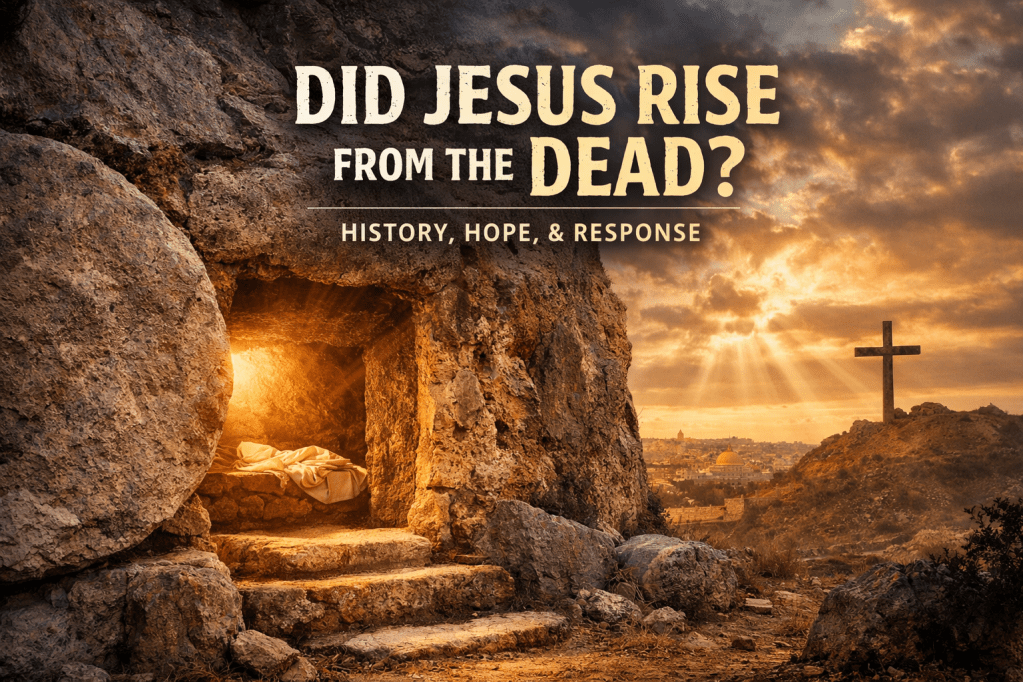
    The Resurrection: Reliable, Relevant, and Transformative

    From a small town in Galilee over two thousand years ago, a movement began under the leadership of Jesus of Nazareth. That movement has since spread to every continent and now counts billions of followers worldwide. Yet despite its global influence, one question remains at the heart of Christian faith: Did Jesus truly rise from the dead?

    The resurrection of Jesus Christ is not only the central event in history but also the cornerstone of Christian belief. In our day, skeptics question both its reality and its relevance. A careful examination of Scripture, however, reveals why the resurrection is historically credible, spiritually transformative, and calls for a response.


    1. The Reliability of the Resurrection

    Several lines of evidence from Scripture support the resurrection’s reliability:

    Multiple Eyewitness Accounts
    Paul emphasizes in 1 Corinthians 15:3–8 that Jesus was seen alive by many after his death:
    “He appeared to Cephas, then to the twelve. After that, he appeared to more than five hundred brothers and sisters at the same time… Then he appeared to James, then to all the apostles.”
    Paul stresses that many witnesses were alive at the time of his writing, inviting verification.

    The Role of Women as First Witnesses
    All four Gospel writers report women as the first witnesses to the empty tomb (Matthew 28:1–10; Mark 16:1–8; Luke 24:1–12; John 20:1–18). In first-century Jewish culture, women’s testimony was often discounted. The consistent inclusion of women as first witnesses strongly suggests these accounts were preserved accurately, rather than fabricated.

    The Transformation of Skeptics
    Those who initially doubted or opposed Jesus became bold witnesses. Peter, who denied Jesus three times, preached openly (Acts 2). Paul, a former persecutor of Christians, became a devoted apostle after encountering the risen Christ (Acts 9). Their radical transformations point to an extraordinary reality: something truly remarkable happened.

    Empty Tomb Confirmed by Authorities
    Even the Gospel writers note that the tomb was heavily guarded (Matthew 27:62–66) and sealed. Opponents suggested the disciples stole the body, but no evidence supports that claim. The presence of Roman guards makes such a theft highly implausible.

    Responding to Skeptical Theories

    • Wrong Tomb Theory: If the women had gone to the wrong tomb, opponents could have simply produced the body from the correct tomb. No such body appeared.
    • Stolen Body Theory: The disciples remained in Jerusalem under threat, boldly proclaiming the resurrection. Their courage undermines the idea of theft.
    • Swoon Theory: The claim that Jesus didn’t die contradicts historical records (John 19:33). Even if he somehow survived crucifixion, he could not have rolled away the stone, evaded Roman guards, or convinced anyone that he had risen.

    2. The Relevance of the Resurrection

    The resurrection is not just a historical fact—it is the foundation of Christian faith and the source of life-changing hope.

    Faith is Futile Without the Resurrection
    1 Corinthians 15:14–17 makes the stakes clear:
    “And if Christ has not been raised, our preaching is useless and so is your faith… and you are still in your sins.”
    The resurrection validates every claim of Jesus’ identity, purpose, and work. Without it, forgiveness and new life would be impossible.

    Raised for Our Justification
    Romans 4:25 teaches that Jesus “was delivered over to death for our sins and was raised to life for our justification.” The resurrection is God’s declaration that sin has been fully paid for and that we are legally reconciled to Him.

    Victory Over Sin and Death
    Romans 6:4–5 explains that believers share in Christ’s victory:
    “We were therefore buried with him through baptism into death in order that, just as Christ was raised from the dead through the glory of the Father, we too may live a new life.”

    Empowered for Godly Living
    Ephesians 1:19–20 describes the same power that raised Jesus from the dead as available to believers:
    “…his incomparably great power for us who believe. That power is the same as the mighty strength he exerted when he raised Christ from the dead and seated him at his right hand in the heavenly realms.”

    Knowing Christ is alive reshapes how we respond to suffering, serve others, and pursue holiness. The resurrection is not merely a past event to admire—it is an ongoing reality that transforms daily life.


    3. The Response to the Resurrection

    The resurrection is meant to elicit a response—not passive admiration.

    Peter’s Pentecost Sermon
    On the day of Pentecost, Peter boldly proclaimed the resurrection:
    “God has raised this Jesus to life, and we are all witnesses of it… Repent and be baptized, every one of you, in the name of Jesus Christ for the forgiveness of your sins” (Acts 2:32–38).
    The resurrection calls every person to faith, repentance, and obedience. It is not merely a historical claim but a personal invitation to experience new life in Christ.

    Ongoing Transformation
    Believers who respond to the resurrection are empowered to live holy, hope-filled lives. They join the same movement that began in Galilee, which continues today through billions of transformed lives across the globe.


    Conclusion

    The resurrection of Jesus is reliable, affirmed by multiple witnesses, consistent accounts, and historical verification. It is relevant, securing forgiveness, new life, and the hope of resurrection for all who believe. And it demands a response, calling people to repentance, faith, and life in Christ.

    As 1 Corinthians 15 and Romans 4 remind us, the resurrection is the bedrock of Christian hope. To doubt it is to question the very foundation of our faith; to embrace it is to enter into the fullness of life, now and forever.

  • The Voice in Your Ear vs. The Shepherd at Your Bedside

    We live in an age where the most influential pastors in a person’s life often aren’t the ones who know their name.

    They’re the voices in our earbuds.
    The clips in our feeds.
    The polished sermons downloaded on demand.

    We can access the best communicators in the world within seconds. And many of them are faithful, gifted, and worth learning from. But something subtle—and deeply dangerous—has happened in the process: we have begun to confuse influence with authority, and access with accountability.

    And in doing so, we have quietly displaced the very men God has actually called to shepherd us.


    When Life Breaks, You Don’t Call a Podcast

    When tragedy hits, you don’t reach for a celebrity preacher.

    When you’re sitting in a hospital room, waiting for news you never wanted to hear…
    When your marriage is unraveling and the silence between you is louder than your arguments…
    When you’re burying someone you love…

    You don’t email a podcast host and expect them to show up.

    They won’t be there to pray with you.
    They won’t sit in the waiting room.
    They won’t come to your home when everything feels like it’s falling apart.
    They won’t stand over your casket one day and preach the hope of the resurrection to those you leave behind.

    But your local pastor will.

    Not because he’s more gifted. Not because he’s more well-known. But because he is yours, and you are his to shepherd.


    The Men Who Watch Over Your Soul

    Scripture does not speak vaguely about pastoral care. It speaks personally.

    Your pastors are not distant voices. They are men who “keep watch over your souls as those who will give an account” (Hebrews 13:17).

    That’s not true of the preacher you listen to on your commute.
    That’s not true of the theologian you follow online.
    That’s not true of the conference speaker whose books line your shelf.

    They may instruct you. They may encourage you. They may even shape your thinking in meaningful ways.

    But they will not stand before God and give an account for you.

    Your elders will.

    They know your life. Your struggles. Your patterns. Your blind spots. Your family. Your growth. Your drift. Your repentance.

    And because of that, they are not merely content producers in your spiritual life—they are shepherds.


    From Shepherd to Employee

    Yet many churches have subtly redefined the role.

    Pastors are treated less like elders and more like employees. Evaluated not by faithfulness, but by preference. Retained as long as they meet expectations. Quietly resisted—or actively opposed—when they don’t.

    We’ve created a consumer culture in the church:

    • If the preaching doesn’t resonate, we disengage.
    • If leadership decisions frustrate us, we criticize.
    • If correction comes, we question authority.
    • If discomfort arises, we consider leaving—or removing the pastor altogether.

    All while continuing to sit under the teaching of distant voices we will never meet.

    It’s a strange inversion: we grant functional authority to those who have no responsibility for us, while resisting the actual authority of those God has placed over us.


    Authority You Can’t Mute

    A podcast can be paused.
    A sermon can be skipped.
    A voice can be unfollowed.

    But a faithful pastor cannot shepherd you that way—and you cannot faithfully be shepherded if you treat him that way.

    Real pastoral authority is not domineering or self-serving. Scripture is clear: elders are not to lord it over the flock, but to serve as examples (1 Peter 5:3). But neither is their authority optional.

    It is relational.
    It is present.
    It is costly.

    It requires knowing and being known. Leading and being followed. Speaking truth and being heard—even when it confronts, corrects, or calls you to something you wouldn’t choose on your own.


    Relearning Honor

    If we are going to recover a healthy church, we must recover a right view of our pastors.

    Not as celebrities.
    Not as content creators.
    Not as hired hands we manage and evaluate.

    But as elders.

    Men appointed to shepherd a specific flock. Men who will labor in prayer, in teaching, in counsel, in correction, and in care. Men who will rejoice with you, weep with you, and walk with you through the long obedience of the Christian life.

    And yes—men who will one day stand before God and answer for how they shepherded you.

    That should sober them.
    And it should humble us.


    A Simple Question

    When you think about the voices shaping your spiritual life, ask yourself:

    Who will be there when it costs something?

    Not when it’s convenient. Not when it’s scalable. Not when it’s a platform.

    But when it’s messy. Personal. Painful. Real.

    That’s your pastor.

    And that’s why he should not just have your attention—but your trust, your respect, and your willingness to be led.

    Because in the end, the most important voice in your life isn’t the one with the largest audience.

    It’s the one who knows your soul.

  • Called to Shepherd, Not to Apply: Rethinking How We Raise Up Pastors

    Jake loved his church.

    He wasn’t on staff. He didn’t have a title. But he was there when people needed him. He taught faithfully. He discipled younger men. He showed up in hospital rooms and living rooms and hard conversations.

    People began to notice.

    “I think Jake might be called to ministry.”

    Eventually, Jake believed it too.

    So he did what everyone told him to do.

    He left.

    He went to seminary. He sat under professors who didn’t know his life, didn’t know his church, and didn’t know the people he had already begun to shepherd. He learned, he studied, he graduated.

    Then he built a résumé.

    He sent it out to churches he had never visited—churches that had never seen him handle conflict, never watched him disciple a struggling believer, never observed his life over time.

    One of them called.

    After a series of interviews, they offered him the position of pastor.

    Jake accepted.

    At first, things went well. He preached faithfully. He worked hard. He cast vision. But slowly, something began to feel off.

    Every decision seemed to run through a group of deacons who functioned less like servants and more like a board of directors. Budgets, priorities, even aspects of ministry direction were filtered through them.

    Jake wasn’t leading as an elder—he was reporting as an employee.

    When tensions arose, they weren’t handled as shepherding issues within a body. They felt like workplace conflicts. Evaluations happened. Concerns were raised. Expectations were clarified.

    And eventually, the relationship fractured.

    Jake resigned.

    Within months, he was updating his résumé again—searching for the next opportunity, the next church, the next “fit.”

    And the church?

    They began the process all over again.

    And no one thought this was strange.

    When the Church Becomes a Corporation

    We’ve created a system that would have been foreign to the New Testament.

    A man senses a call, leaves his church to be trained elsewhere, and then enters a kind of ministry marketplace—applying, interviewing, negotiating—until he is hired by a church that barely knows him.

    Once there, he often functions not as a recognized elder among a known people, but as a professional brought in to perform a role.

    And in many cases, the structure reinforces it.

    Deacons—who in Scripture are called to serve—can drift into functioning like a governing board. The pastor—who is called to shepherd and oversee—can be subtly recast as a kind of employee accountable to that board.

    It’s not always explicit. No one says it out loud.

    But it shows up in how decisions are made, how authority is structured, and how easily a pastor can be replaced.

    The Assumption We Never Question

    Underneath all of this is an assumption we rarely examine:

    That a “call to ministry” is a call to become the senior pastor somewhere else.

    But that category doesn’t come from Scripture.

    The New Testament speaks of elders—plural—who shepherd a local church together (Acts 14:23, Titus 1:5). It does not present a lone “senior pastor” as the goal of a man’s calling.

    So what if Jake’s calling was not to leave?

    What if his calling was to shepherd the flock of God among him?

    What if the recognition of his gifting by his church was not the first step away from that body—but deeper intoresponsibility within it?

    One of the most overlooked paths in our current system is this:

    A man is called… and he stays.

    He is raised up as an elder in the very church where his life is already known. He shepherds the people who have seen his character. He leads alongside other elders, not above them. He doesn’t need a new platform—he embraces a present responsibility.

    But in many of our contexts, that option is barely visible.

    We’ve unintentionally trained men to think that faithfulness means leaving.

    Shepherds Don’t Job Hop

    If a pastor is functionally an employee, then leaving for another church can feel no different than taking a new position somewhere else.

    But shepherding isn’t a career ladder.

    It’s a calling to people.

    Peter says, “shepherd the flock of God that is among you” (1 Peter 5:2).

    Not the one hundreds of miles away.

    Not the one you interviewed for.

    The one among you—people who know your life, who have seen your faithfulness, who can affirm your calling because they’ve witnessed it over time.

    The Root Problem: Disconnected Formation

    We have separated the raising up of pastors from the life of the local church.

    Instead of being trained, tested, and affirmed within a body, men are often formed at a distance and then inserted into a church as outsiders.

    That creates a fragile foundation from the start.

    The church doesn’t truly know the man.

    The man doesn’t truly know the church.

    And when pressure comes—and it always does—there is not enough relational depth to hold things together.

    A Better Pattern: Raised Up and Sent Out

    The New Testament offers a better way.

    A man senses a call and brings it to his elders. They test it. They observe his life. They give him opportunities to teach, to lead, to shepherd.

    Over time, he is not just educated—he is known.

    And then one of two things happens:

    He is recognized as an elder in that church, continuing to shepherd the very people among whom he was formed.

    Or—

    He is sent out by that church to plant, revitalize, or strengthen another work.

    In Acts 13, the church at Antioch sets apart Paul and Barnabas and sends them out. They go not as independent ministers seeking opportunity, but as men recognized and commissioned by a local body.

    Not hired.

    Sent.

    Restoring the Right Roles

    Recovering this vision also restores clarity to the offices of the church.

    Elders lead, shepherd, and oversee.

    Deacons serve, support, and meet tangible needs.

    When those roles are blurred, the church suffers. When they are restored, the church flourishes.

    Pastors are no longer treated like entry-level employees trying to prove themselves to a board.

    They are recognized as shepherds—among a people, alongside other elders, under Christ.

    The Way Forward

    Recovering this will require a shift in how we think about calling.

    Not every called man needs to go somewhere else.

    Some need to stay.

    Some need to shepherd the flock already among them.

    And some need to be sent—but sent by a church that knows them, affirms them, and remains connected to them.

    That means slowing down. Investing deeply. Raising up men instead of importing them.

    It means resisting the instinct to turn pastors into employees and churches into hiring organizations.

    Because the goal is not to fill positions.

    It is to faithfully shepherd the flock of God.

    Not far away.

    But among you.

  • Unity in the Church: Remembering What Christ Has Done

    Unity in the Church: Remembering What Christ Has Done

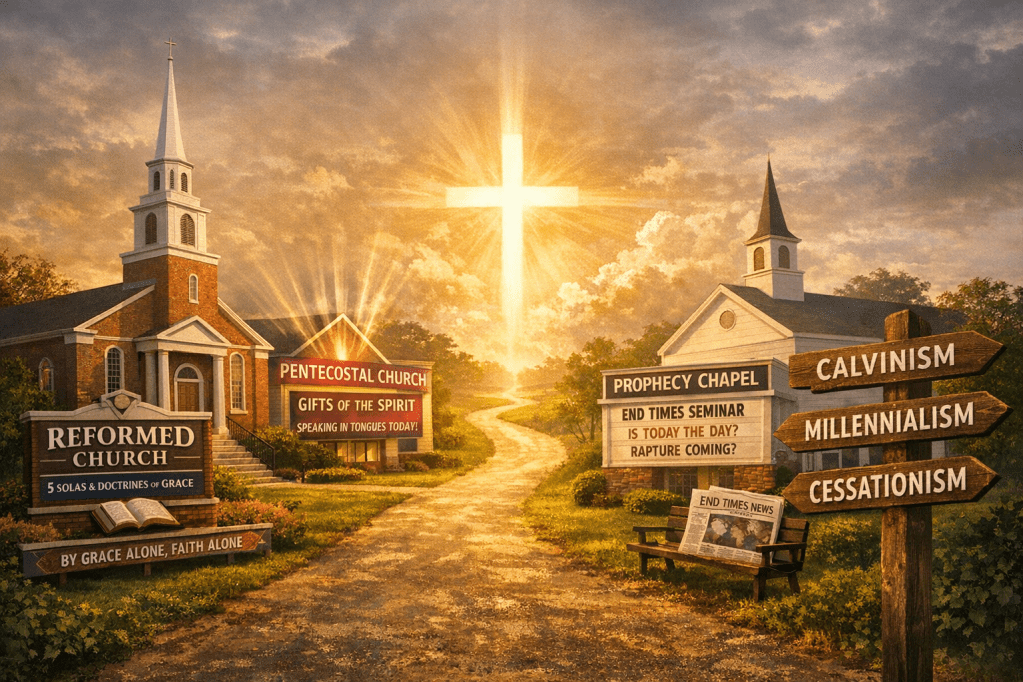
    Walk down the main street of almost any town, and you’ll see it: a row of churches, each claiming to follow Christ—but each telling a very different story about what that means. One proudly declares itself Reformed, emphasizing the Five Solas and doctrines of grace, preaching a careful, methodical theology of God’s sovereignty. Next door, another brims with energy, speaking in tongues, emphasizing the gifts of the Spirit, and calling the congregation to expect miracles and prophecy in every service. A few blocks away, yet another church is consumed with the end times, pouring over dates, headlines, and signs in the sky, warning believers to be prepared for the coming tribulation.

    On the surface, it may look like diversity—variety in worship styles, theology, and emphasis. But underneath, the reality is often far less beautiful: suspicion, judgment, and competition. The differences that should enrich the body of Christ instead become dividing walls.

    Into this fractured landscape, Paul’s words in Ephesians 2 speak with timeless power: the dividing wall between Jew and Gentile has been broken down. Former enemies are now reconciled, not by compromise, but by the finished work of Christ on the cross. Our unity is grounded in something far deeper than personal preferences or theological nuances.

    And yet, unity requires effort. In Ephesians 4, Paul calls the church to “make every effort to maintain the unity of the Spirit in the bond of peace,” anchored in “one faith, one Lord, one baptism.” Differences in gifts, personality, and approach are real, but they must never overshadow the gospel that makes us one.


    The Modern Challenge

    In today’s fractured church landscape, it’s easy to forget what binds us together. Churches that emphasize different doctrines or worship styles often speak past one another, inadvertently elevating secondary debates above the primary mission of the gospel. One church meticulously studies God’s sovereignty, another exuberantly exercises spiritual gifts, while a third dissects headlines for end-times signs. Individually, each pursuit has value—but collectively, when these emphases overshadow the gospel itself, the witness of the church suffers.

    Paul’s letters repeatedly show a remarkable clarity on what is of first importance. In 1 Corinthians 15, for example, he insists that the resurrection is non-negotiable: if Christ has not been raised, our faith is futile. Likewise, even in letters filled with detailed teaching on conduct, doctrine, and church life, Paul consistently points his readers back to the central truths of the gospel. The resurrection, justification by faith, and the reconciliation brought by Christ’s death and resurrection are the essentials—everything else, while important, is subordinate.


    Pursuing Unity Today

    So, how can churches pursue unity in this environment without surrendering doctrinal conviction? The pathway is both simple in principle and challenging in practice: focus on the essentials, honor differences, and prioritize the mission.

    1. Anchor in the Gospel – Like the Jew and Gentile reconciled in Ephesians 2, the church today must root its unity in Christ’s finished work. Salvation, the resurrection, and the lordship of Christ form the foundation of our fellowship. Differences in secondary doctrines or worship style must never overshadow this anchor.
    2. Celebrate Differences in Gifts – Paul reminds us in Ephesians 4 that the Spirit gives diverse gifts to build up the body. Unity does not require uniformity. The Reformed preacher, the charismatic teacher, and the eschatology enthusiast all contribute to the body’s maturity—if we focus on the gifts rather than the differences.
    3. Prioritize the Mission – The ultimate test of unity is not doctrinal agreement on every point, but faithful obedience to Christ’s command: make disciples of all nations, teaching them to observe all that He has commanded(Matthew 28:19–20). Churches that measure success by spiritual fruit—lives transformed, souls won, disciples trained—naturally gravitate toward what matters most.
    4. Practice Humility and Peace – Maintaining unity requires intentional humility. We must enter conversations ready to listen, willing to defer on secondary matters, and slow to judge. Paul calls this “making every effort to maintain the unity of the Spirit in the bond of peace” (Ephesians 4:3). It is a daily discipline, not a one-time declaration.
    5. Focus on “First Things First” – Like Paul, we must constantly remind ourselves of what is essential. Doctrinal instruction, governance, and worship style have their place, but they serve the gospel, not the other way around. Churches that keep first things first are best positioned to live out both unity and mission.

    Conclusion: Living Out the Unity Christ Bought

    Unity in the church is not about erasing differences or pretending disagreements don’t exist. It is about letting the gospel define our relationships, so that even amid differences in gifts, doctrine, and style, the church can reflect the reconciling work of Christ.

    If the churches in that small town—the Reformed, the charismatic, the eschatology-focused—could place the gospel at the center of their lives and ministries, they would model what Paul describes: diverse, yet one; different, yet united; passionate about Christ, yet humble toward one another.

    Christ died to make us one. Our task is to pursue that unity with diligence, focus on what is of first importance, and channel our energy toward winning souls and making disciples. When we do, our differences enrich the body rather than divide it, and the world sees the power of Christ’s love lived out in a fractured but reconciling church.

  • “Wealth Without Wisdom: Proverbs 22:16 and the False Promise of Prosperity”

    “Wealth Without Wisdom: Proverbs 22:16 and the False Promise of Prosperity”

    “Whoever oppresses the poor to increase his own wealth, or gives to the rich, will only come to poverty.” — Proverbs 22:16

    The Prosperity Promise—and the Proverb That Exposes It

    The prosperity gospel offers a simple formula: give, believe, and God will make you wealthy. It turns faith into a mechanism for financial gain and generosity into a strategy for return on investment.

    But Proverbs 22:16 quietly dismantles that vision.

    Rather than presenting wealth as the automatic result of spiritual activity, this proverb exposes how wealth is often pursued wrongly—and how those pursuits end not in blessing, but in loss.

    Oppressing the Poor: When Religion Exploits the Vulnerable

    “Whoever oppresses the poor to increase his own wealth…”

    This is more than ancient injustice; it is a timeless warning. The poor are not to be used as a means of gain.

    Yet the prosperity gospel can mirror this pattern when it pressures those with the least to give the most—promising financial breakthrough if they sow sacrificially. In doing so, it risks turning the suffering of the poor into a revenue stream.

    Proverbs calls that what it is: oppression, even when dressed in spiritual language.

    Giving to the Rich: The Illusion of Strategic Generosity

    “…or gives to the rich, will only come to poverty.”

    This exposes another subtle error—giving not out of love, but out of ambition. It is generosity aimed upward, hoping to gain favor, access, or reflected blessing.

    In prosperity thinking, this often becomes “sowing into” already wealthy leaders or ministries in hopes of sharing in their success. Giving becomes transactional, almost superstitious.

    But Proverbs warns: this path does not lead to increase. It leads to emptiness.

    The Missing Piece: How Proverbs Actually Says Wealth Comes

    If the prosperity gospel is wrong, what does Proverbs say instead?

    Over and over again, Proverbs gives a consistent, grounded answer: wealth—when it comes at all—comes through diligence, patience, and ordinary work.

    • “A slack hand causes poverty, but the hand of the diligent makes rich.” (Proverbs 10:4)
    • “The plans of the diligent lead surely to abundance, but everyone who is hasty comes only to poverty.” (Proverbs 21:5)
    • “Whoever works his land will have plenty of bread, but he who follows worthless pursuits lacks sense.” (Proverbs 12:11)
    • “The soul of the sluggard craves and gets nothing, while the soul of the diligent is richly supplied.” (Proverbs 13:4)

    There is no hint here of financial return through giving formulas or faith declarations. The path is slower, less glamorous, and far more grounded:

    Work. Plan. Be diligent. Avoid shortcuts.

    This doesn’t guarantee riches—but it does reflect God’s ordinary design for provision.

    The Danger of Shortcuts

    The prosperity gospel thrives on immediacy. Sow today, reap tomorrow. Give now, receive a hundredfold.

    But Proverbs repeatedly warns against that mindset:

    • “Wealth gained hastily will dwindle, but whoever gathers little by little will increase it.” (Proverbs 13:11)

    This is perhaps one of the clearest contradictions of prosperity teaching in the entire Bible.

    True increase, when it comes, is gradual, not explosive. It is built, not declared. It grows “little by little,” not through spiritualized shortcuts.

    A Different Definition of Blessing

    At its core, the prosperity gospel misdefines blessing.

    Proverbs redefines it:

    • Better to be righteous than rich (Proverbs 16:8)
    • Better to have little with the fear of the Lord (Proverbs 15:16)
    • A good name is greater than great riches (Proverbs 22:1)

    Blessing is not measured by accumulation, but by character, wisdom, and the fear of the Lord.

    The Ironic End: Poverty

    Proverbs 22:16 closes with a sobering irony: those who chase wealth through exploitation or manipulation will end in poverty.

    This includes:

    • Those who take advantage of the poor
    • Those who give for self-advancement
    • And, by extension, those who try to bypass God’s design for provision

    The prosperity gospel promises abundance, but it often produces disillusionment—if not financial poverty, then certainly spiritual poverty.

    Conclusion

    Proverbs offers a far more realistic—and far more faithful—vision of life:

    • Wealth is not the measure of God’s favor
    • Giving is not a strategy for personal gain
    • And provision ordinarily comes through diligence, not declarations

    Proverbs 22:16 calls us to reject every system that exploits, manipulates, or shortcuts God’s design.

    Instead, it invites us into a wiser path—one marked by integrity, steady labor, contentment, and trust in the Lord.

    Not flashy. Not immediate. But true.

  • Why Some Baptists Look to Anglicanism for Authority — And Why the Answer Is Closer to Home

    Why Some Baptists Look to Anglicanism for Authority — And Why the Answer Is Closer to Home

    In recent years, it has become increasingly common to hear stories of Baptists who find themselves drawn toward Anglicanism. Often the attraction is framed in terms of liturgy, tradition, or beauty. But beneath those surface explanations lies a deeper issue: authority and ecclesiology.

    Many Baptists are not primarily searching for incense and prayer books. They are searching for order. They are searching for leadership. And sometimes they are searching for relief from dysfunctional congregationalism.

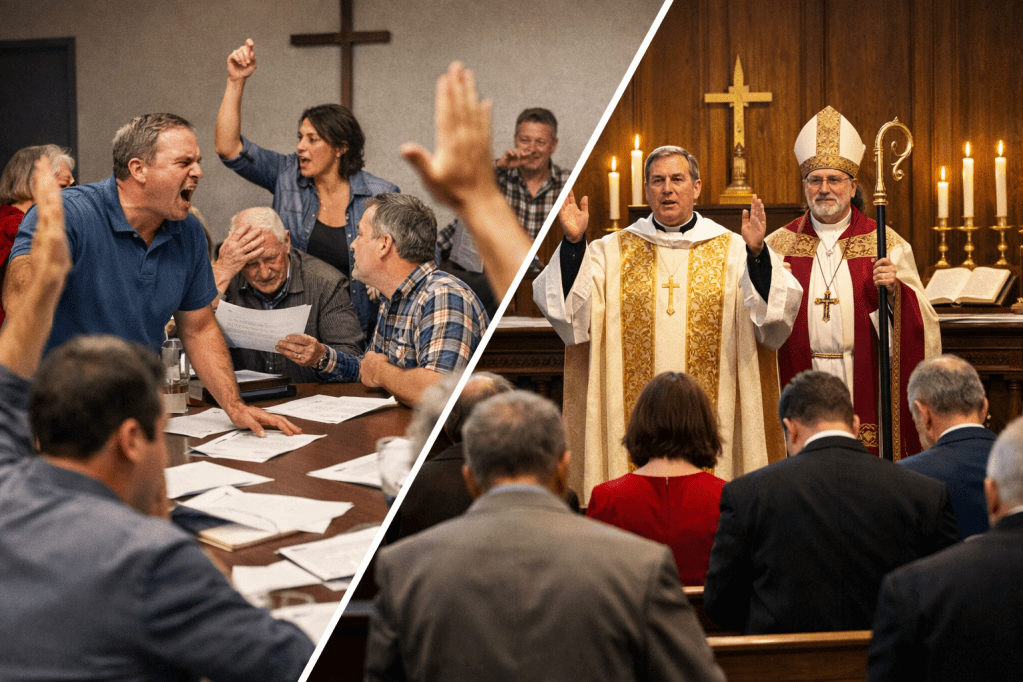
    Unfortunately, some Baptist churches have unintentionally turned their polity into something resembling a town council meeting rather than a biblical congregation.

    But the solution is not to abandon Baptist ecclesiology. The solution is to recover it.


    The Problem: Congregationalism Without Leadership

    Historically, Baptists have affirmed congregational polity. This means that the final earthly authority in the church resides in the congregation itself. Major matters—such as receiving members, appointing leaders, and practicing church discipline—are entrusted to the body.

    This principle was never meant to create constant democracy.

    Yet in many churches today, business meetings can become exercises in parliamentary maneuvering:

    • Members debating minor operational details
    • Committees controlling ministry direction
    • Pastors treated like hired staff
    • Decisions driven by the loudest personalities in the room

    Instead of spiritual discernment, meetings sometimes resemble a civic hearing.

    When that happens, the congregation is no longer exercising biblical authority. It is exercising raw influence.

    And influence often flows not to the wisest voices but to the loudest ones.


    Why Anglicanism Begins to Look Attractive

    Against that backdrop, the ordered structure of Anglicanism can appear refreshing.

    Anglican churches operate with episcopal polity, where bishops oversee clergy and provide hierarchical leadership. Authority flows downward through established offices rather than emerging through congregational deliberation.

    For Baptists exhausted by chaotic governance, this can feel stabilizing.

    Instead of endless debates, there is structure.
    Instead of congregational factions, there is clerical authority.

    To someone who has experienced unhealthy congregationalism, episcopal systems can seem like the obvious answer.

    But the problem was never congregationalism itself.

    The problem was the abandonment of biblical leadership within it.


    What Baptist Ecclesiology Was Meant to Be

    Early Baptists never envisioned congregational life as a perpetual democracy.

    Congregational authority existed to protect the gospel, not to manage the church like a corporation. Pastors were not mere facilitators of meetings. They were shepherds charged with spiritual oversight.

    The New Testament consistently portrays church leaders as those who teach, guide, and govern under Christ’s authority.

    The congregation holds final responsibility, but pastors exercise real leadership.

    When these roles function properly, congregational authority becomes a safeguard, not a substitute for leadership.


    Recovering Pastoral Authority

    Many Baptist churches today need not a new ecclesiology, but a renewed confidence in pastoral leadership.

    Pastors should not function as corporate managers who simply implement whatever the congregation votes. They are called to shepherd, teach, and guide the church.

    Healthy churches recognize this authority without drifting into clericalism.

    The pastor leads.
    The elders shepherd.
    The congregation affirms and guards the faith.

    When that balance is lost, congregational meetings become arenas for power struggles rather than moments of corporate discernment.


    What Member Meetings Are Actually For

    Church meetings should not resemble municipal governance.

    They exist for a few essential purposes:

    • Receiving and restoring members
    • Practicing church discipline
    • Affirming leaders
    • Celebrating what God is doing in the church

    They are not designed to decide carpet colors, debate scheduling decisions, or adjudicate personal preferences.

    When meetings are limited to their proper scope, they become meaningful expressions of the church’s shared responsibility under Christ.


    The Loudest Voices Are Not the Church

    One of the greatest dangers in unhealthy congregationalism is the rise of informal power structures.

    When pastoral authority is weakened, leadership does not disappear. It simply shifts.

    It shifts to:

    • long-tenured members
    • dominant personalities
    • influential families

    In such environments, the church is not governed by Scripture but by social dynamics.

    And ironically, this produces far less accountability than healthy pastoral leadership would.


    The Answer Is Not Elsewhere

    It is understandable why some Baptists look to traditions like Anglicanism for solutions. When congregational life becomes chaotic, ordered hierarchy looks appealing.

    But abandoning congregationalism is not the answer.

    The Baptist vision—when properly practiced—combines pastoral leadership with congregational responsibility. It protects both the authority of shepherds and the accountability of the church.

    Rather than seeking stability elsewhere, Baptists should rediscover the wisdom within their own tradition.

    Congregationalism does not require chaos.
    Pastoral authority does not require hierarchy.
    And church meetings do not need to resemble town halls.

    When pastors lead faithfully and congregations follow wisely, the church reflects the order Christ intended.

    And when that happens, there is far less temptation to look for solutions outside the house.

  • Does the Modern Nation of Israel Have a Special Relationship with God?

    Does the Modern Nation of Israel Have a Special Relationship with God?

    Few questions generate more debate among Christians today than this one: Does the modern nation of Israel have a unique covenant relationship with God? Many believers assume that because Israel was God’s chosen nation in the Old Testament, the present-day political state of Israel must still occupy that same status. But when we examine the full storyline of Scripture—from Abraham to Christ and the church—the answer becomes clearer.

    The modern nation of Israel does not possess a unique covenant relationship with God in the way Old Testament Israel once did. That role has reached its fulfillment in Jesus Christ and the people united to Him by faith.


    Israel Was God’s Chosen Nation in the Old Testament

    The story begins with God’s covenant with Abraham.

    In Genesis 12:1–3, God promised Abraham three things:

    1. Descendants – Abraham would become a great nation.
    2. Land – His offspring would inherit the land of Canaan.
    3. Blessing – Through him all nations of the earth would be blessed.

    From Abraham came Isaac, then Jacob, and Jacob’s descendants became the nation of Israel. When famine struck the land, the family of Jacob migrated to Egypt where they eventually multiplied into a great people.

    Centuries later, God raised up Moses to deliver them from slavery. Through mighty acts of judgment against Egypt, God brought Israel out in the Exodus, forming them into His covenant people at Mount Sinai.

    Under Moses they left Egypt, and under Joshua they entered the Promised Land. Israel was uniquely chosen among the nations. As Deuteronomy 7:6 says:

    “For you are a people holy to the Lord your God. The Lord your God has chosen you to be a people for his treasured possession.”

    Israel had a real and unique covenant relationship with God in the Old Testament. They received the law, the prophets, the temple, the priesthood, and the promises.

    But their election was not an end in itself.


    Israel’s Purpose Was to Bring Forth the Messiah

    The Old Testament makes clear that Israel’s calling was ultimately messianic. God chose Israel in order to bring the Savior into the world.

    The promises to Abraham already hinted at this:

    “In you all the families of the earth shall be blessed.” (Genesis 12:3)

    The apostle Paul later explains that this promise pointed ultimately to Christ (Galatians 3:16).

    Israel was the channel through which God would send the Redeemer. Their history, kings, sacrifices, prophets, and covenants all prepared the world for the coming Messiah.

    And when Jesus arrived, the New Testament reveals something profound: Jesus Himself is the true Israel.


    Jesus Is the True Israel

    In the Old Testament, Israel was repeatedly called God’s son.

    For example, Hosea 11:1 says:

    “Out of Egypt I called my son.”

    Originally this referred to the nation of Israel coming out of Egypt in the Exodus. But the Gospel of Matthew applies this same passage directly to Jesus (Matthew 2:15) when He returns from Egypt as a child.

    This is not a mistake. It is a theological claim.

    Jesus recapitulates the story of Israel.

    Consider the parallels:

    • Israel went into Egypt → Jesus went into Egypt.
    • Israel came out of Egypt → Jesus came out of Egypt.
    • Israel passed through the Red Sea → Jesus passed through baptism.
    • Israel wandered 40 years in the wilderness → Jesus fasted 40 days in the wilderness.
    • Israel was tested and failed → Jesus was tested and obeyed perfectly.

    Where Israel failed, Jesus succeeded.

    He embodies in Himself everything Israel was meant to be: the faithful Son of God.

    This means that the promises given to Israel ultimately converge on Christ.


    The Church Is the People of God in Christ

    If Jesus is the true Israel, then the people united to Him become the true people of God.

    The New Testament repeatedly teaches that membership in God’s people is no longer defined by ethnicity but by faith in Christ.

    Paul writes in Romans 9:6–8:

    “Not all who are descended from Israel belong to Israel… it is not the children of the flesh who are the children of God, but the children of the promise.”

    Likewise in Galatians 3:7:

    “Know then that it is those of faith who are the sons of Abraham.”

    And again:

    “If you are Christ’s, then you are Abraham’s offspring, heirs according to promise.” (Galatians 3:29)

    The true heirs of Abraham are not defined by Jewish ancestry but by faith in the Messiah.

    Paul even uses striking language in Galatians 6:16, referring to believers as “the Israel of God.”

    The church—made up of Jews and Gentiles united in Christ—has inherited the promises that once belonged to Israel as a nation.


    What This Means for the Modern Nation of Israel

    The modern state of Israel is a real political nation like any other country. Its people should be treated with dignity and justice, just like every nation.

    But Scripture does not teach that the modern nation-state has a unique covenant relationship with God.

    Why?

    Because the covenant role of Israel has already reached its fulfillment.

    • The promises pointed to Christ.
    • The mission of Israel was completed in the coming of the Messiah.
    • The people of God are now defined by union with Christ, not national identity.

    Under the new covenant, the dividing wall between Jew and Gentile has been removed. As Paul writes in Ephesians 2:14–16, Christ has made both groups into one new humanity.

    In other words, the center of God’s redemptive plan is no longer a geopolitical nation but a global people gathered from every tribe, language, and nation.


    A Better Promise

    Ironically, the New Testament vision is not smaller than the Old Testament promise—it is much larger.

    The promise to Abraham was never merely about one strip of land in the Middle East. It was about blessing all nations.

    In Christ, that promise is now being fulfilled as the gospel spreads throughout the world and people from every nation become children of Abraham by faith.

    The focus of God’s redemptive plan is therefore not a modern nation-state, but Jesus Christ and His church.


    So does the modern nation of Israel have a special covenant relationship with God today?

    According to the New Testament, the answer is no.

    Israel’s unique role in redemptive history was real and vital—but it reached its goal in the coming of the Messiah. Now the people of God are those who belong to Christ, whether Jew or Gentile, forming the true Israel of God under the new covenant.

  • Does the U.S.–Israel Airstrike Fulfill Ezekiel 38?

    Does the U.S.–Israel Airstrike Fulfill Ezekiel 38?

    An Amillennial Analysis in a Time of Conflict

    In recent days the world has watched in shock as the United States and Israel launched coordinated airstrikes against Iran, a campaign that has struck key military and strategic sites in Tehran and other Iranian cities. These strikes — part of a broader conflict involving Iranian retaliation, regional escalation, and geopolitical tension — have dominated headlines. 

    Because of this, many Christians have asked a familiar eschatological question: “Is this the fulfillment of Ezekiel 38?”After all, that prophecy explicitly names Persia — which corresponds to modern Iran — among the nations allied with Gog in an end‑times coalition against Israel

    No wonder so many Christians are feeling anxious: a prophecy that mentions Persia being involved in a great conflict against Israel sounds eerily close to current headlines.

    The Dispensational Position: “Yes — Possibly”

    In dispensational premillennialism, passages like Ezekiel 38–39 are understood as future, literal, end‑times events. In that framework:

    • Israel is interpreted as a literal nation in the land.
    • Gog and Magog are seen as identifiable nations or leaders assembling a coalition to attack Israel in the last days.
    • Persia is naturally identified with Iran because of the linguistic and geographical continuity between ancient Persiaand modern Iran

    From that vantage point, any major military confrontation involving Israel and Iran — especially one with U.S. involvement — feels like it could be moving us toward the fulfillment of Ezekiel’s prophecy.

    That’s why it’s common to see livestreams, blog posts, and social‑media threads pointing to headlines about Iranian targets, airspace control, missile strikes, and Tehran explosions as “signs” of Ezekiel 38 being fulfilled. 

    What Most Biblical Scholars Say

    Before we go further, it’s important to note something: most biblical scholars — including those who do not hold to dispensational premillennialism — do not see current events as a straightforward fulfillment of Ezekiel 38.

    Scholars point out that biblical prophecy uses symbolic language, theological imagery, and ancient Near Eastern motifs that are not easily — and often should not be — mapped directly onto modern state‑level conflicts. Ezekiel’s list of nations (Magog, Persia, Cush, Put, Gomer, etc.) may indeed correspond to broad geographical regions in antiquity, but that doesn’t automatically mean the text is a news bulletin about today’s geopolitics. Many theologians emphasize that identifying ancient names with modern nations is speculative and not a reliable hermeneutical method for end‑times prediction. 

    The Amillennial Perspective

    From an amillennial standpoint — which reads eschatological prophecy inaugurated already/not‑yet rather than as a step‑by‑step military forecast — the idea that a U.S.–Israel airstrike against Iran fulfills Ezekiel 38 has several problems:

    1. The Identity of “Israel”:
    Amillennial theologians understand the people of God in Ezekiel not as the modern nation‑state of Israel but as the covenant people of God — the Church — encompassing both Jews and Gentiles united in Christ. Thus, references to Israel’s future in Ezekiel are spiritual and theological rather than geographical‑political.

    2. The Nature of “Gog and Magog”:
    Rather than a future literal alliance of nations strictly identifiable on a 21st‑century map, “Gog” and “Magog” are often read as symbolic of the forces of evil and worldly powers opposed to God throughout history. The imagery points us to spiritual opposition — culminating in Christ’s victory — not to specific military campaigns.

    3. The Purpose of the Prophecy:
    Ezekiel 38–39, in the amillennial reading, echoes the broader biblical motif: God will deliver His people and defeat all enemies. The prophecy reassures readers of divine sovereignty over chaos and conflict, not that a specific modern war automatically completes a timetable of events.

    4. Persia = Iran Doesn’t Change the Hermeneutic:
    Yes — and this is part of why people are reacting emotionally — ancient Persia is geographically analogous to modern Iran. Ezekiel uses the name Persia because that was the historical designation of the region. But recognizing that historical connection doesn’t prove that Iran’s current conflict with Israel is the prophetic fulfillment Ezekiel envisioned, because the literary and theological context of the prophecy matters far more than a loose geographical link.

    So, What Should Christians Think?

    An amillennial perspective urges caution against news‑driven eschatology — reading daily headlines as prophecy checkboxes — and instead invites us to see Ezekiel 38 not as a coded prediction of modern geopolitics, but as a theological assurance:

    God will confront His enemies and preserve His people.

    Our hope isn’t in tracking military campaigns on the evening news — but in Christ’s victory over sin, death, and all hostile powers, a victory already inaugurated in His resurrection and assured at His return.

  • From Pulpit and Platform to Stools and Sneakers: What our Churches are saying about Authority

    From Pulpit and Platform to Stools and Sneakers: What our Churches are saying about Authority

    Walk into many historic Protestant churches and you would notice a pattern.

    The pastor presided over the service from the platform.
    He sat visibly before the congregation.
    He stood behind a prominent pulpit to preach.
    He wore formal attire—often a suit and tie, sometimes even a robe.

    None of these elements were arbitrary. They communicated something about office, authority, and responsibility.

    Walk into many churches today and you may notice something different.

    The pastor sits among the congregation until it is “his turn.”
    The pulpit has been replaced by a small table or music stand.
    He may preach from a stool.
    His attire might be jeans and sneakers.

    Individually, none of these choices are sinful. But collectively, they communicate something. And over time, they have reshaped how many congregations perceive pastoral authority.


    When Pastors Presided

    Historically, pastors did not simply deliver sermons; they presided over worship. Their visible presence on the platform signaled that Christ governs His church through appointed shepherds.

    This was not Roman Catholic sacerdotalism. The Reformers—men like John Calvin and Martin Luther—rejected priestly mediation. But they strongly affirmed pastoral office. The minister was not a spiritual celebrity, but he was a recognized overseer.

    His elevated seat on the platform symbolized:

    • Accountability before God
    • Responsibility for ordering worship
    • Authority to preach and guard doctrine

    The congregation did not view him as “one voice among many.” He was their shepherd.

    Hebrews 13:17 speaks plainly: “Obey your leaders and submit to them, for they are keeping watch over your souls.” That kind of soul-watch requires recognized authority.


    The Shift to Sitting Among the Congregation

    In recent decades, many pastors have intentionally chosen to sit among the congregation rather than preside visibly.

    The motivations are understandable:

    • To emphasize humility
    • To avoid clerical distance
    • To express the priesthood of all believers

    Yet something subtle happens when the shepherd is visually indistinguishable from the flock during the service.

    The symbolic weight of the office lessens.

    The pastor is still ordained. He is still accountable. But the visual cues that reinforced that reality disappear. Worship can begin to feel less ordered by shepherding authority and more facilitated by a rotating group of participants.

    Again, this is not about pride. It is about clarity. Scripture maintains a distinction between elders and congregation—not of worth, but of responsibility.


    From Pulpit to Table

    Alongside the shift in seating has been a shift in preaching posture.

    The pulpit once stood at the center because preaching stood at the center. The preacher stood as a herald—announcing divine truth.

    The Reformation’s recovery of preaching was architectural as well as theological. The pulpit was theology in wood.

    Today, many pulpits are gone. In their place:

    • A café-style table
    • A music stand
    • A handheld microphone
    • A stool

    The tone often becomes conversational rather than declarative.

    There is nothing inherently wrong with clarity, warmth, or accessibility. But posture shapes perception.

    Standing behind a pulpit says, “Thus says the Lord.”

    Sitting on a stool can feel like, “Here are some thoughts to consider.”

    Over time, congregations may begin to treat sermons less as authoritative exposition and more as spiritual TED Talks.


    From Suits to Sneakers

    Dress also communicates.

    Historically, pastors wore formal attire not because Scripture mandated suits, but because their clothing reflected the gravity of their office and the solemnity of worship.

    In many modern contexts, pastors now dress like the average attendee—or even more casually.

    Again, clothing is not a moral absolute. Scripture does not command a tie.

    But attire signals role.

    In every sphere of life, uniforms communicate authority and responsibility. Judges wear robes. Police officers wear badges. Military officers wear insignia. Clothing distinguishes office from individual.

    When pastors intentionally erase visual distinction, they may communicate approachability—but they may also unintentionally diminish perceived weight.

    The cumulative effect of casual seating, casual posture, and casual dress is often a casual perception of authority.


    The Podcast Authority Problem

    Overlaying all of this is the digital age.

    Congregants can now listen weekly to preachers across the globe—figures like John Piper, Alistair Begg, or the late Tim Keller. These men may effectively function as theological authorities in the minds of listeners.

    This is a gift in many ways. Faithful preaching is a blessing.

    But it creates a danger: the displacement of local authority.

    A podcast preacher cannot:

    • Exercise church discipline
    • Shepherd your family personally
    • Order your congregation’s worship
    • Give an account for your soul

    Your pastor can.

    Yet if the visual and symbolic weight of the local office has been steadily diminished—no presiding presence, no pulpit, no visible distinction—the congregation may subconsciously grant more authority to the distant voice than to the shepherd Christ has actually placed over them.


    Symbols Shape Souls

    We live in a culture that distrusts authority and prizes informality. The church has not been immune to this drift.

    In trying to avoid clericalism, we may have flattened shepherding.

    In trying to avoid celebrity culture, we may have created a new one—digital and disembodied.

    In trying to emphasize humility, we may have blurred office.

    None of these shifts—platform seating, pulpit removal, casual dress—automatically destroy authority. But together they catechize congregations. They teach, week after week, what to expect from leadership.

    And what is expected eventually becomes what is believed.


    Recovering Respect Without Arrogance

    The answer is not necessarily a universal return to towering pulpits and three-piece suits. Architecture alone cannot create reverence.

    But churches must ask:

    • Do our practices communicate that Christ rules His church?
    • Do they reflect that pastors will give an account for souls?
    • Do they reinforce the seriousness of preaching?

    Authority in the church must be humble, accountable, and Christlike.

    But it must also be real.

    Christ did not give His church content creators.
    He gave shepherds.

    Whether standing behind a pulpit or sitting on a platform chair, wearing a suit or simple attire, what must not be lost is this: the pastoral office is a divine gift for the good of the flock.

    And when the visible symbols of that office disappear, respect for it often fades with them.

    The church must not only preach about authority—it must embody it in ways that clearly, wisely, and reverently communicate that Christ truly governs His people through appointed shepherds.