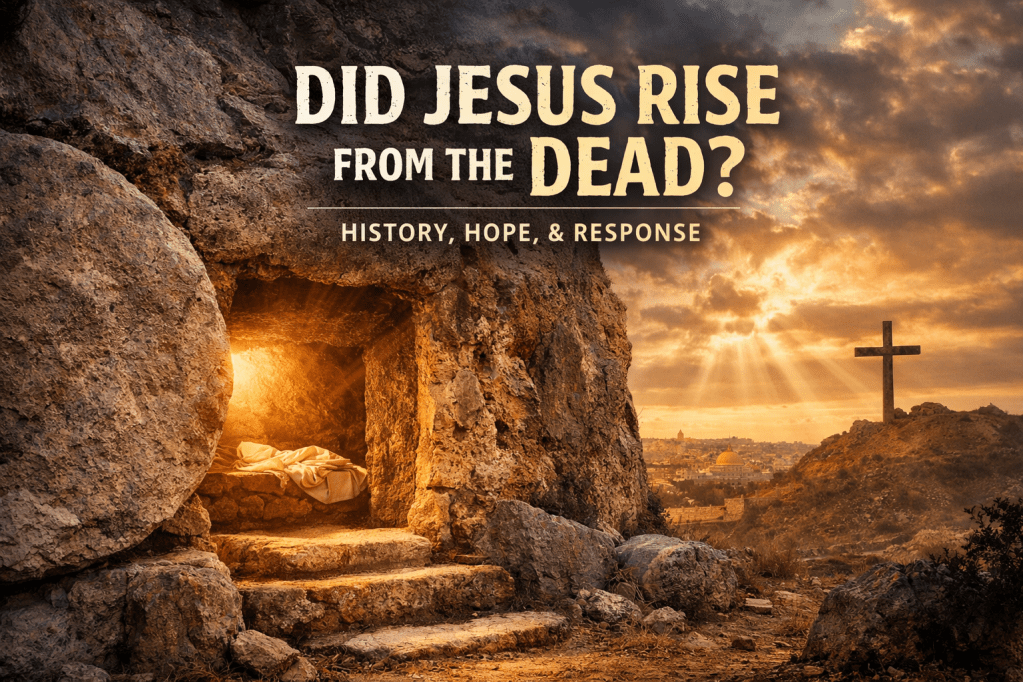
From a small town in Galilee over two thousand years ago, a movement began under the leadership of Jesus of Nazareth. That movement has since spread to every continent and now counts billions of followers worldwide. Yet despite its global influence, one question remains at the heart of Christian faith: Did Jesus truly rise from the dead?
The resurrection of Jesus Christ is not only the central event in history but also the cornerstone of Christian belief. In our day, skeptics question both its reality and its relevance. A careful examination of Scripture, however, reveals why the resurrection is historically credible, spiritually transformative, and calls for a response.
1. The Reliability of the Resurrection
Several lines of evidence from Scripture support the resurrection’s reliability:
Multiple Eyewitness Accounts
Paul emphasizes in 1 Corinthians 15:3–8 that Jesus was seen alive by many after his death:
“He appeared to Cephas, then to the twelve. After that, he appeared to more than five hundred brothers and sisters at the same time… Then he appeared to James, then to all the apostles.”
Paul stresses that many witnesses were alive at the time of his writing, inviting verification.
The Role of Women as First Witnesses
All four Gospel writers report women as the first witnesses to the empty tomb (Matthew 28:1–10; Mark 16:1–8; Luke 24:1–12; John 20:1–18). In first-century Jewish culture, women’s testimony was often discounted. The consistent inclusion of women as first witnesses strongly suggests these accounts were preserved accurately, rather than fabricated.
The Transformation of Skeptics
Those who initially doubted or opposed Jesus became bold witnesses. Peter, who denied Jesus three times, preached openly (Acts 2). Paul, a former persecutor of Christians, became a devoted apostle after encountering the risen Christ (Acts 9). Their radical transformations point to an extraordinary reality: something truly remarkable happened.
Empty Tomb Confirmed by Authorities
Even the Gospel writers note that the tomb was heavily guarded (Matthew 27:62–66) and sealed. Opponents suggested the disciples stole the body, but no evidence supports that claim. The presence of Roman guards makes such a theft highly implausible.
Responding to Skeptical Theories
- Wrong Tomb Theory: If the women had gone to the wrong tomb, opponents could have simply produced the body from the correct tomb. No such body appeared.
- Stolen Body Theory: The disciples remained in Jerusalem under threat, boldly proclaiming the resurrection. Their courage undermines the idea of theft.
- Swoon Theory: The claim that Jesus didn’t die contradicts historical records (John 19:33). Even if he somehow survived crucifixion, he could not have rolled away the stone, evaded Roman guards, or convinced anyone that he had risen.
2. The Relevance of the Resurrection
The resurrection is not just a historical fact—it is the foundation of Christian faith and the source of life-changing hope.
Faith is Futile Without the Resurrection
1 Corinthians 15:14–17 makes the stakes clear:
“And if Christ has not been raised, our preaching is useless and so is your faith… and you are still in your sins.”
The resurrection validates every claim of Jesus’ identity, purpose, and work. Without it, forgiveness and new life would be impossible.
Raised for Our Justification
Romans 4:25 teaches that Jesus “was delivered over to death for our sins and was raised to life for our justification.” The resurrection is God’s declaration that sin has been fully paid for and that we are legally reconciled to Him.
Victory Over Sin and Death
Romans 6:4–5 explains that believers share in Christ’s victory:
“We were therefore buried with him through baptism into death in order that, just as Christ was raised from the dead through the glory of the Father, we too may live a new life.”
Empowered for Godly Living
Ephesians 1:19–20 describes the same power that raised Jesus from the dead as available to believers:
“…his incomparably great power for us who believe. That power is the same as the mighty strength he exerted when he raised Christ from the dead and seated him at his right hand in the heavenly realms.”
Knowing Christ is alive reshapes how we respond to suffering, serve others, and pursue holiness. The resurrection is not merely a past event to admire—it is an ongoing reality that transforms daily life.
3. The Response to the Resurrection
The resurrection is meant to elicit a response—not passive admiration.
Peter’s Pentecost Sermon
On the day of Pentecost, Peter boldly proclaimed the resurrection:
“God has raised this Jesus to life, and we are all witnesses of it… Repent and be baptized, every one of you, in the name of Jesus Christ for the forgiveness of your sins” (Acts 2:32–38).
The resurrection calls every person to faith, repentance, and obedience. It is not merely a historical claim but a personal invitation to experience new life in Christ.
Ongoing Transformation
Believers who respond to the resurrection are empowered to live holy, hope-filled lives. They join the same movement that began in Galilee, which continues today through billions of transformed lives across the globe.
Conclusion
The resurrection of Jesus is reliable, affirmed by multiple witnesses, consistent accounts, and historical verification. It is relevant, securing forgiveness, new life, and the hope of resurrection for all who believe. And it demands a response, calling people to repentance, faith, and life in Christ.
As 1 Corinthians 15 and Romans 4 remind us, the resurrection is the bedrock of Christian hope. To doubt it is to question the very foundation of our faith; to embrace it is to enter into the fullness of life, now and forever.
 Doctrine and Mission
Leave a comment