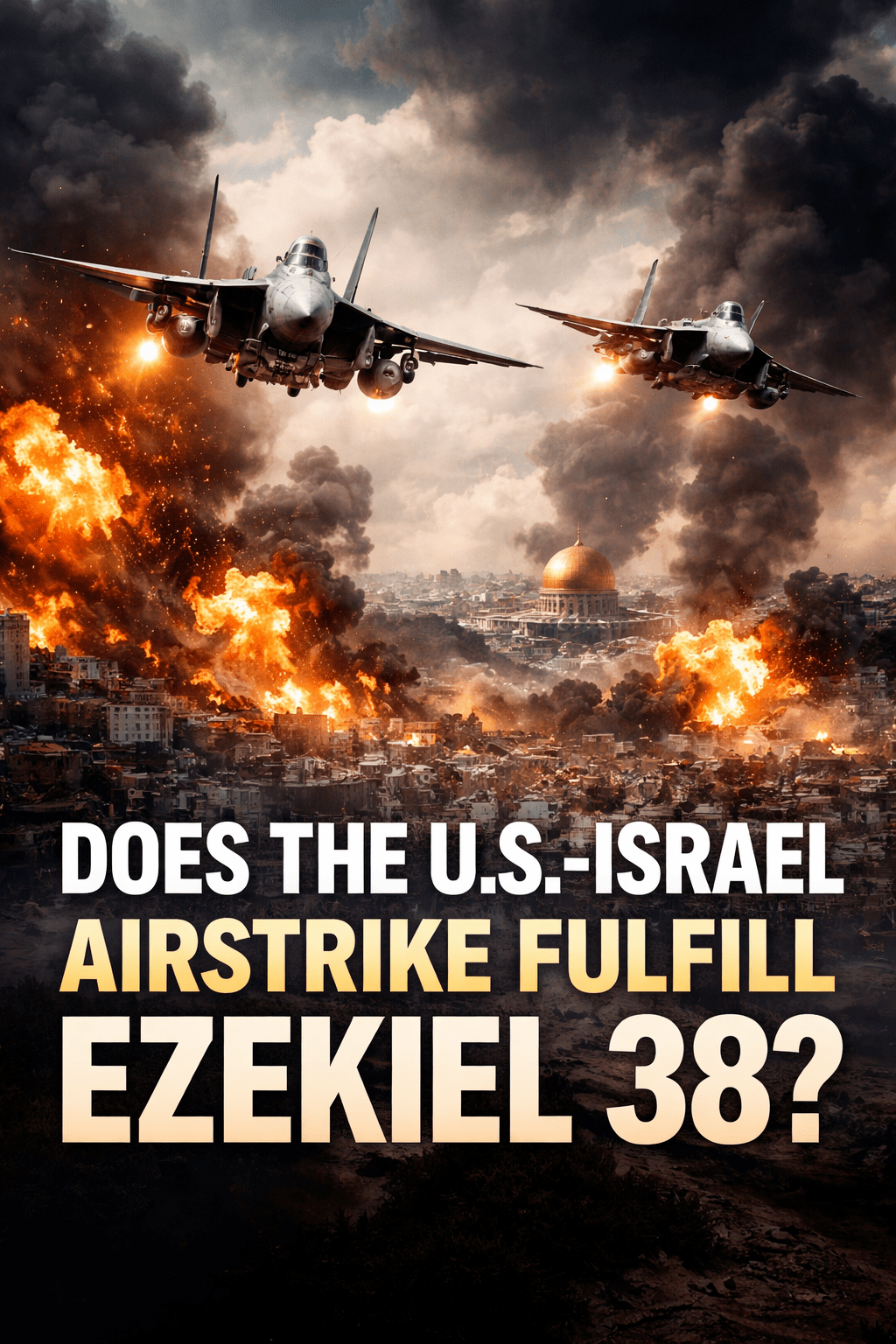
An Amillennial Analysis in a Time of Conflict
In recent days the world has watched in shock as the United States and Israel launched coordinated airstrikes against Iran, a campaign that has struck key military and strategic sites in Tehran and other Iranian cities. These strikes — part of a broader conflict involving Iranian retaliation, regional escalation, and geopolitical tension — have dominated headlines.
Because of this, many Christians have asked a familiar eschatological question: “Is this the fulfillment of Ezekiel 38?”After all, that prophecy explicitly names Persia — which corresponds to modern Iran — among the nations allied with Gog in an end‑times coalition against Israel.
No wonder so many Christians are feeling anxious: a prophecy that mentions Persia being involved in a great conflict against Israel sounds eerily close to current headlines.
The Dispensational Position: “Yes — Possibly”
In dispensational premillennialism, passages like Ezekiel 38–39 are understood as future, literal, end‑times events. In that framework:
- Israel is interpreted as a literal nation in the land.
- Gog and Magog are seen as identifiable nations or leaders assembling a coalition to attack Israel in the last days.
- Persia is naturally identified with Iran because of the linguistic and geographical continuity between ancient Persiaand modern Iran.
From that vantage point, any major military confrontation involving Israel and Iran — especially one with U.S. involvement — feels like it could be moving us toward the fulfillment of Ezekiel’s prophecy.
That’s why it’s common to see livestreams, blog posts, and social‑media threads pointing to headlines about Iranian targets, airspace control, missile strikes, and Tehran explosions as “signs” of Ezekiel 38 being fulfilled.
What Most Biblical Scholars Say
Before we go further, it’s important to note something: most biblical scholars — including those who do not hold to dispensational premillennialism — do not see current events as a straightforward fulfillment of Ezekiel 38.
Scholars point out that biblical prophecy uses symbolic language, theological imagery, and ancient Near Eastern motifs that are not easily — and often should not be — mapped directly onto modern state‑level conflicts. Ezekiel’s list of nations (Magog, Persia, Cush, Put, Gomer, etc.) may indeed correspond to broad geographical regions in antiquity, but that doesn’t automatically mean the text is a news bulletin about today’s geopolitics. Many theologians emphasize that identifying ancient names with modern nations is speculative and not a reliable hermeneutical method for end‑times prediction.
The Amillennial Perspective
From an amillennial standpoint — which reads eschatological prophecy inaugurated already/not‑yet rather than as a step‑by‑step military forecast — the idea that a U.S.–Israel airstrike against Iran fulfills Ezekiel 38 has several problems:
1. The Identity of “Israel”:
Amillennial theologians understand the people of God in Ezekiel not as the modern nation‑state of Israel but as the covenant people of God — the Church — encompassing both Jews and Gentiles united in Christ. Thus, references to Israel’s future in Ezekiel are spiritual and theological rather than geographical‑political.
2. The Nature of “Gog and Magog”:
Rather than a future literal alliance of nations strictly identifiable on a 21st‑century map, “Gog” and “Magog” are often read as symbolic of the forces of evil and worldly powers opposed to God throughout history. The imagery points us to spiritual opposition — culminating in Christ’s victory — not to specific military campaigns.
3. The Purpose of the Prophecy:
Ezekiel 38–39, in the amillennial reading, echoes the broader biblical motif: God will deliver His people and defeat all enemies. The prophecy reassures readers of divine sovereignty over chaos and conflict, not that a specific modern war automatically completes a timetable of events.
4. Persia = Iran Doesn’t Change the Hermeneutic:
Yes — and this is part of why people are reacting emotionally — ancient Persia is geographically analogous to modern Iran. Ezekiel uses the name Persia because that was the historical designation of the region. But recognizing that historical connection doesn’t prove that Iran’s current conflict with Israel is the prophetic fulfillment Ezekiel envisioned, because the literary and theological context of the prophecy matters far more than a loose geographical link.
So, What Should Christians Think?
An amillennial perspective urges caution against news‑driven eschatology — reading daily headlines as prophecy checkboxes — and instead invites us to see Ezekiel 38 not as a coded prediction of modern geopolitics, but as a theological assurance:
God will confront His enemies and preserve His people.
Our hope isn’t in tracking military campaigns on the evening news — but in Christ’s victory over sin, death, and all hostile powers, a victory already inaugurated in His resurrection and assured at His return.
 Doctrine and Mission