Tag: Bible Leadership

  • When Churches Prefer Control Over Shepherding: A Call for Tested Pastors and Biblical Maturity

    When Churches Prefer Control Over Shepherding: A Call for Tested Pastors and Biblical Maturity

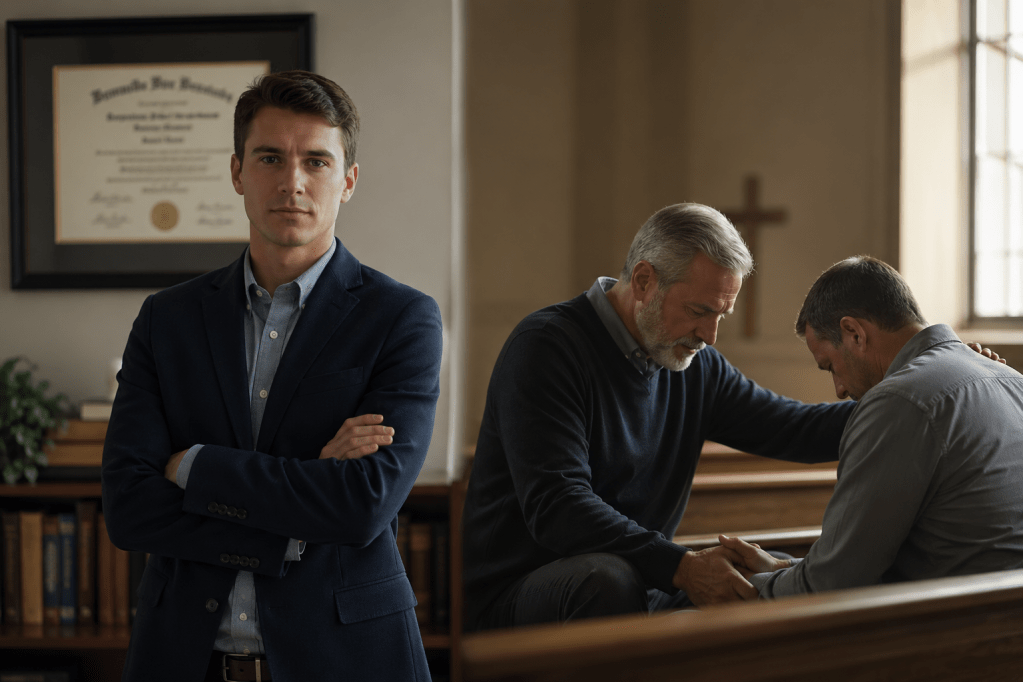
    There is a troubling pattern emerging in some churches—one that is often unspoken but plainly visible. Rather than seeking faithful, seasoned shepherds, some congregations repeatedly install very young pastors, not because they are the most qualified, but because they are the most manageable.

    This is not a new problem. But it is one that strikes at the very heart of what Christ intends for His church.

    The Subtle Temptation: A Pastor You Can Manage

    It would be unfair to say every young pastor is chosen for the wrong reasons. God has used many men in their twenties in powerful ways. Yet there are cases where the pattern becomes too consistent to ignore: a church cycles through inexperienced men, often bypassing older, proven shepherds.

    Why?

    Because a younger, less-tested pastor is often easier to influence, easier to redirect, and—if we are honest—easier to control.

    But this reveals a deeper issue. The problem is not ultimately age. It is authority.

    Some churches do not want a shepherd they must follow. They want a figurehead they can guide.

    And that is a dangerous inversion of God’s design.

    Christ’s Design: Shepherds Who Lead, Churches That Follow

    Scripture consistently presents pastors as shepherds who lead, not representatives who merely reflect congregational preferences.

    In passages like Hebrews 13:17, believers are commanded to “obey your leaders and submit to them, for they are keeping watch over your souls.” Likewise, elders are described in 1 Peter 5 as those who “shepherd the flock of God… exercising oversight.”

    This does not mean pastors are authoritarian. Far from it. Biblical leadership is marked by humility, gentleness, and accountability.

    But it does mean this:
    A church is not called to control its shepherd, but to be shepherded by him.

    When a church consistently avoids strong, mature leadership in favor of pliability, it is not protecting itself—it is resisting God’s appointed means of care.

    The Biblical Weight of Being “Tested”

    One of the clearest qualifications for church leadership is that a man be tested and proven.

    In 1 Timothy 3, Paul warns against appointing a “recent convert,” lest he become conceited and fall into condemnation. While this passage is often applied narrowly to spiritual maturity, the principle is broader:
    Men entrusted with spiritual oversight must have a track record of faithfulness.

    They must have:

    • Endured suffering
    • Navigated conflict
    • Shepherded real people through real sin and sorrow
    • Demonstrated stability over time

    This kind of formation does not happen quickly.

    It is forged in the ordinary, often hidden work of ministry—years of being corrected, refined, and sharpened under the leadership of other faithful pastors.

    A Word to Young Men: Do Not Rush the Process

    For men in their twenties who feel called to ministry, the exhortation is not “step back,” but “slow down.”

    There is a world of difference between:

    • Having gifting, and
    • Being ready to shepherd a flock

    Young men need:

    • Time under wise elders
    • Space to make mistakes without catastrophic consequences
    • Opportunities to teach, serve, and grow without bearing the full weight of pastoral responsibility

    To pursue the pastorate prematurely is not a mark of zeal—it can be a failure to grasp the gravity of the office.

    The desire to lead must be matched by the willingness to be led.

    A Word to Churches: Seek Shepherds, Not Projects

    Churches must ask themselves a hard question:

    Do we want a pastor we can shape, or a shepherd who will shape us?

    The answer will determine not only the health of the leadership, but the spiritual trajectory of the entire congregation.

    Faithful churches should look for men who are:

    • Above reproach over time
    • Proven in doctrine and life
    • Respected by those who know them best
    • Seasoned enough to lead without being swayed by every internal pressure

    This does not mean age alone qualifies a man. But it does mean that experience matters, and testing matters.

    A church that consistently avoids such men may not be protecting itself—it may be avoiding accountability.

    The Cost of Getting This Wrong

    When churches prioritize control over qualification, several things happen:

    • Leadership becomes weak or inconsistent
    • The congregation remains immature
    • Conflict is mishandled or avoided
    • The church slowly reshapes itself around preferences instead of truth

    In the end, both pastor and people suffer.

    The young man is placed in a role he is not yet ready to bear.
    The church is deprived of the mature care it desperately needs.

    A Better Way Forward

    The solution is not to exclude young men from ministry, nor to idolize age.

    It is to return to a biblical vision:

    • Young men are trained, tested, and sent—not rushed.
    • Churches seek proven shepherds—not controllable leaders.
    • Pastors lead with humility—and congregations follow with trust.

    This is slower. It is less convenient. It requires patience on all sides.

    But it is God’s way.

    And in the long run, it produces something far better than control:

    It produces healthy churches, faithful pastors, and a testimony that reflects the wisdom of Christ Himself.

  • Beyond the Conservative Resurgence

    Why Past Movements Were Not Enough—and What the SBC Needs Now

    In the late 20th century, the Conservative Resurgence rescued the Southern Baptist Convention from doctrinal drift. It restored biblical inerrancy in our seminaries, pulpits, and denominational institutions. This was no small feat—it preserved theological faithfulness for a new generation.

    Then came the Great Commission Resurgence, calling us to a renewed focus on evangelism, church planting, and global mission. With declining baptisms and a changing culture, it reminded Southern Baptists that our doctrinal fidelity must also drive missional urgency.

    But as we reflect now, we must ask: did either movement transform the soul of our churches?
    We have right beliefs—and we’ve declared right priorities. But our churches remain divided, disillusioned, and in many places, declining.

    Southern Baptists do not need another branding campaign or strategic slogan. We need a true resurgence—not just of ideas, but of people. A renewal that begins in the pew, not just on the platform.

    Here are six essential resurgences the SBC must embrace to move faithfully into the future.


    1. A Resurgence of Integrity

    The Southern Baptist Convention has weathered doctrinal battles—but now faces a crisis of trust. Many Southern Baptists believe the theological convictions we fought to preserve are being undermined by institutional secrecy, platform protection, and personal ambition. The issue isn’t merely orthodoxy—it’s credibility.

    Why it’s needed:
    In a time when confidence in leadership is eroding, we need leaders and institutions whose lives and practices match the gospel they proclaim. If we lose integrity, we lose the ability to lead.

    What it looks like:

    • Financial transparency in our entities and institutions, with clear accountability to the churches that fund them.
    • Building trust among messengers, not through managed narratives, but through openness, repentance when necessary, and a return to servant-hearted leadership.
    • Leaders who walk humbly, avoiding personal empire-building and resisting the temptation to treat the SBC as a career ladder or political arena.
    • Churches that expect godly character, not just communication skills or charisma, from their pastors and leaders.

    “The integrity of the upright guides them, but the crookedness of the treacherous destroys them.” – Proverbs 11:3


    2. A Resurgence of Discipleship

    Southern Baptists have long measured ministry success by decisions and attendance. But far too often, we’ve made converts without making disciples. The result is spiritual immaturity in our churches and generational drift in our families.

    Why it’s needed:
    We cannot build gospel churches on shallow soil. And we cannot expect the next generation to walk with Christ if we do not teach them how.

    What it looks like:

    • Intentional, relational discipleship—not just programs, but people walking with people in the ways of Christ.
    • Family discipleship, where parents—and especially fathers—are equipped to teach, model, and shepherd their children in the faith (Eph. 6:4).
    • Biblical literacy, with churches prioritizing Scripture memory, meditation, and obedience—not just inspirational content.
    • Training lay leaders, raising up deacons, elders, teachers, and counselors from within the congregation.

    “Teaching them to observe all that I have commanded you…” – Matthew 28:20


    3. A Resurgence of Unity in the Gospel

    We are fragmented. Not just politically or theologically—but relationally. The SBC has become a battlefield of tribes, factions, and personalities, where brothers in Christ are treated as enemies because of differing emphases or affiliations.

    Why it’s needed:
    We cannot fight side by side for the lost when we’re firing shots at each other. Gospel unity is not a luxury—it’s a necessity.

    What it looks like:

    • Refusing tribalism—choosing fellowship with faithful brothers and sisters even when we don’t agree on every strategy or secondary issue.
    • Keeping the main things central—like Christ crucified, the authority of Scripture, and the need for the nations to hear the gospel.
    • Disagreeing with humility, rejecting online scorched-earth tactics, and speaking truth seasoned with grace.

    “There is one body and one Spirit… one Lord, one faith, one baptism, one God and Father of all.” – Ephesians 4:4–6


    4. A Resurgence of Church Health

    You cannot send strong missionaries from sick churches. The SBC has focused heavily on church planting and multiplication—which is essential. But far too many established churches are spiritually stagnant, unbiblically led, or dying.

    Why it’s needed:
    The foundation of the SBC is not its entities or its mission boards. It’s the local church. If our churches are unhealthy, our Convention has no future.

    What it looks like:

    • Qualified pastors and elders, who lead with courage, conviction, and compassion.
    • Meaningful membership, where church rolls reflect regenerate believers in real community.
    • Expository preaching and Christ-centered worship, feeding the sheep, not entertaining the goats.
    • Support for revitalization, encouraging faithful pastors of smaller churches and resisting the idolatry of church size or fame.

    “The church of the living God, a pillar and buttress of the truth.” – 1 Timothy 3:15


    5. A Resurgence of Physical Presence in a World of Followers and Likes

    We live in an age of digital disembodiment—TikToks over tables, threads over truth, clicks over community. The SBC must resist the gravitational pull of the virtual by reasserting the beauty and necessity of the local, visible, gathered church.

    Why it’s needed:
    Online influence has too often replaced in-person shepherding. But the body of Christ was never meant to be a brand—it is a body.

    What it looks like:

    • Churches that prioritize presence: gathering in person, breaking bread, laying hands, weeping and rejoicing together.
    • Pastors who know their people and walk with them, not just broadcast sermons.
    • Disciples who live in proximity, not merely affinity.

    “And the Word became flesh and dwelt among us…” – John 1:14
    “Let us not neglect to meet together…” – Hebrews 10:25


    6. A Resurgence of Clarity and Conviction in a World of Ambiguity

    We are living in a fog of postmodern confusion—about truth, gender, morality, and even salvation itself. Many churches are tempted to trade clarity for complexity, fearing offense more than fearing God.

    Why it’s needed:
    The world is not looking for another vague voice. It needs truth. Spoken with love, yes—but spoken clearly, without compromise.

    What it looks like:

    • Preaching with doctrinal precision, applying God’s Word boldly to cultural lies and spiritual error.
    • Standing firm on God’s design for manhood and womanhood, marriage, and the sanctity of life.
    • Holding fast to salvation by grace alone through faith alone, without theological drift or equivocation.
    • Teaching with theological depth, equipping people to stand firm in a world that is constantly shifting.

    “If the trumpet gives an uncertain sound, who shall prepare himself to the battle?” – 1 Corinthians 14:8 (KJV)


    Final Word: Not a Platform but a People

    The Conservative Resurgence gave us our doctrinal foundation.
    The Great Commission Resurgence gave us a missional framework.
    Now, we need a resurgence that gives us spiritual formation—in the pews, in our homes, and in our pulpits.

    We need leaders of integrity.
    We need churches that make disciples.
    We need a fellowship built on the gospel.
    We need pastors rooted in real communities.
    We need truth spoken in love and without fear.

    This next resurgence must not be top-down, but grassroots.
    Not powered by politics, but prayer.
    Not about reclaiming influence, but reclaiming faithfulness.

    Let it begin not in a task force, but in your local church.
    Let it begin with us.